Sound familiar?Toronto
- The call
- On a cold morning the remote does nothing useful: the light comes on, the motor turns briefly, the door stays shut. There may be a fresh crack in a rusty coil, and flakes of orange on the floor below the shaft.
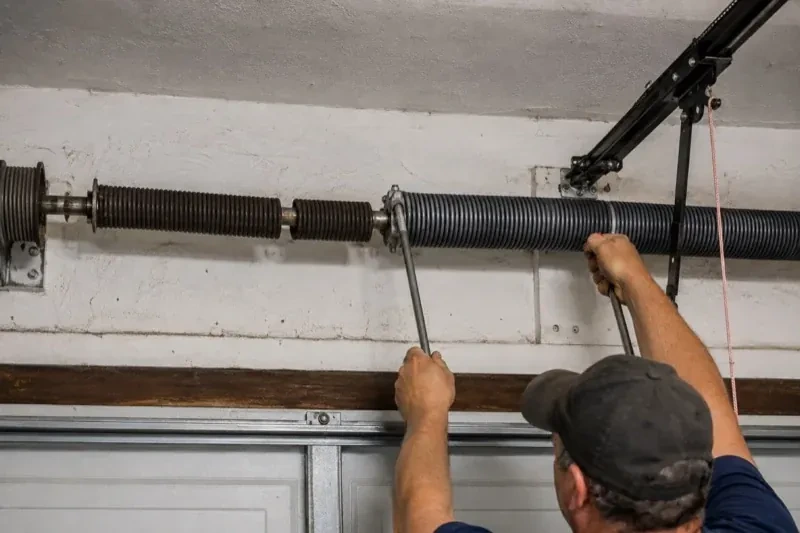
Every spring is built for a number of open-close cycles, and replacement is a natural moment to choose that number deliberately. A standard residential spring is commonly rated around ten thousand cycles; a family that opens the door six times a day uses those up in a few years. Higher-cycle springs use heavier wire and a longer coil to produce the same force with less stress on the steel, so they last proportionally longer. The technician can explain the trade-off and fit whichever option suits the household's use of the door, then wind and balance it accordingly.
Sound familiar?Toronto
Torsion Spring Replacement · Toronto
Scene 1
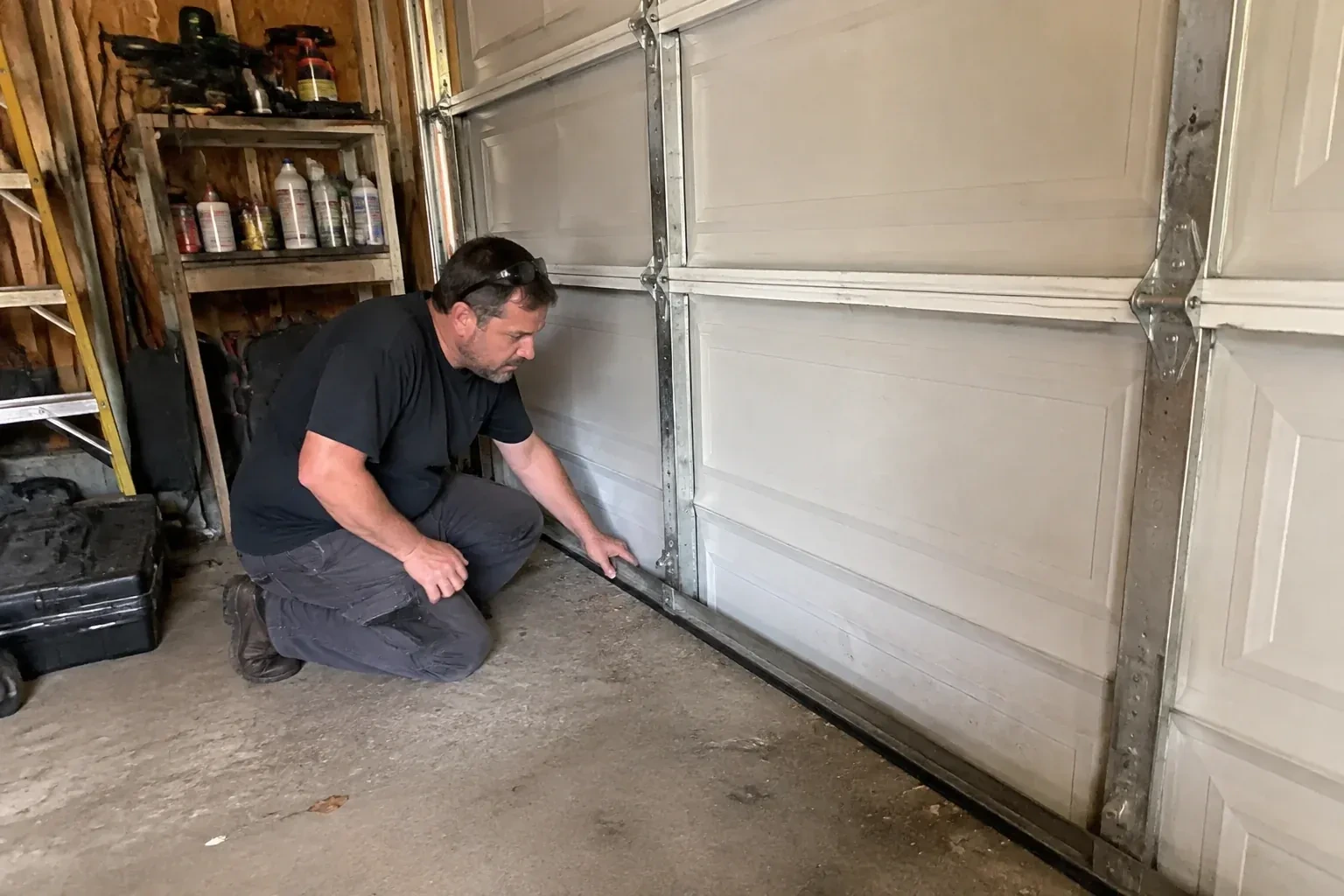
Before anything is measured or removed, the door and the opener are put into a controlled state. The opener is unplugged and the trolley released so the motor cannot move the door partway through the job. The door is brought fully closed, and locking pliers or clamps are set on the track just above a roller so the door stays down while spring tension changes. The technician clears the space beneath the shaft, checks that people and pets are out of the garage, and looks at where a vehicle sits so the ladder and winding position are safe.
Scene 2
On a two-spring door the springs are installed as a set: one left-wound and one right-wound, mirrored on either side of the centre bracket, with matching wire size, diameter and length so each carries half the load. Both stationary cones bolt to the centre bracket and both winding cones face outward. The technician winds each spring the same number of quarter turns, alternating between them, so the shaft is never loaded unevenly. Once both are set, the door is balanced and tested as one system. Equal springs mean equal wear, so the pair reaches the end of its life together rather than one after the other.
Scene 3
A little care keeps the new spring running smoothly for its full life. Once or twice a year, spray the coils with a garage-door lubricant so the steel moves without rubbing, and do the same for the hinges, roller bearings and the end bearings at each side of the shaft. Autumn is a good time, since cold thickens grease and stiffens hardware. Leave the track dry, because lubricant there collects grit. Over the years, glance at the spring for gaps or rust streaks, and if the door starts to feel heavier by hand, book a balance check before a spring reaches its limit.
What shapes the quoteDownsview Door Specialists
FeesSame any hour
Most residential replacements are completed in one visit. Securing the door, measuring, removing the old spring, fitting and winding the new one, balancing and testing the opener typically takes an hour or two, longer if bearings, cables or a bent top section are also being dealt with. The technician confirms the scope after the first checks, so you know what the visit involves before the work starts.
Cold makes steel slightly less forgiving and thickens the grease on the coils, so a spring that has already used most of its cycle life is more likely to let go on a frosty morning when the door is first opened. The cold is the final straw rather than the cause; the underlying reason is fatigue from years of cycles, sometimes helped along by rust and dry coils.
Not necessarily, and that is fine. The paint colour on the winding cone or coil is a code that identifies wire size and wind direction, and different suppliers use their own schemes, so a matched replacement can carry a different colour than the spring it replaces. What matters is that the wire size, diameter, length and wind direction suit the door's weight and height, which is confirmed by the balance test.
TorontoOntario
Torsion Spring Replacement · Downsview, North Park
Every square is one home in a hundred.
On-site assessment
The door drops the last stretch to the floor rather than settling, and when you stop it halfway by hand it slides down instead of staying put.
(289) 236-6217, open 24/7.
On-site assessment preferred · (289) 236-6217, open 24/7