Sound familiar?Toronto
- The call
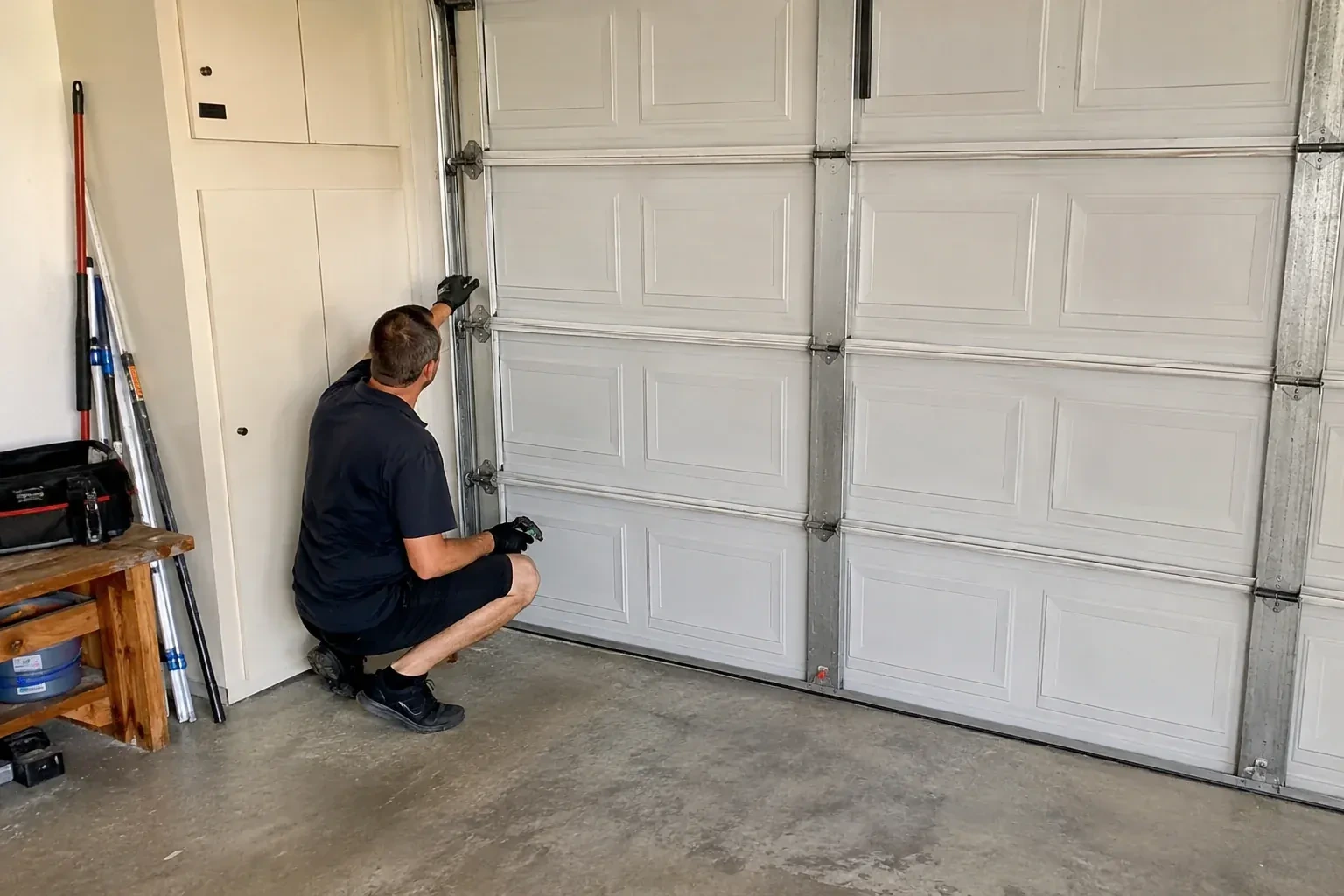
- One side of the door hangs a hand's width lower than the other. A steel cable is drooping in a loop beside the track instead of running tight to the drum, and the whole door looks tilted in the opening.
The finish of an off-track reset matters as much as the re-seating. Once the rollers are home and the track is true, the door is disconnected from the opener and moved by hand through its whole travel while every roller is watched in its rail. At the halfway point it should stay put with little effort, which shows the springs are carrying the weight properly. Only then is the opener reconnected, its travel limits and force checked, and its safety reversal tested with a block on the floor and a carton passed through the photo-eye beam from a safe distance. You see the door work before the technician leaves.
Sound familiar?Toronto
Off-Track Garage Door Reset · Toronto
Scene 1
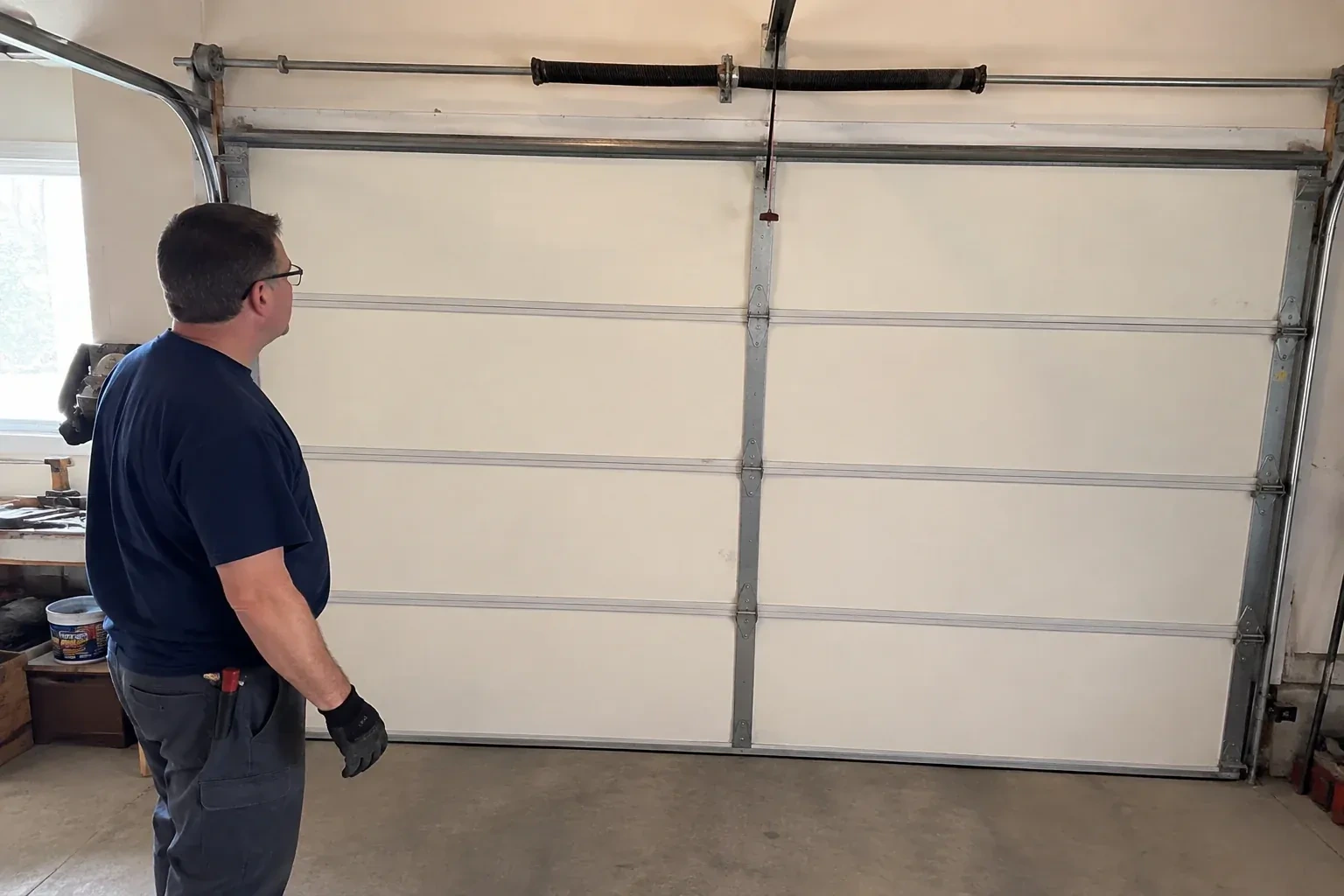
The counterbalance is what will carry the door once it is back on its rails, so its condition is assessed at the start. Torsion springs above the header are checked for a break in the coil, a gap between coils and a loose stationary cone; extension springs beside the horizontal track are checked for stretch and for the containment cable running through them. The technician also looks at whether the springs match the door's weight, because a door that was already heavy for its springs makes the opener drag the sections and is a common background cause of a roller working loose.
Scene 2
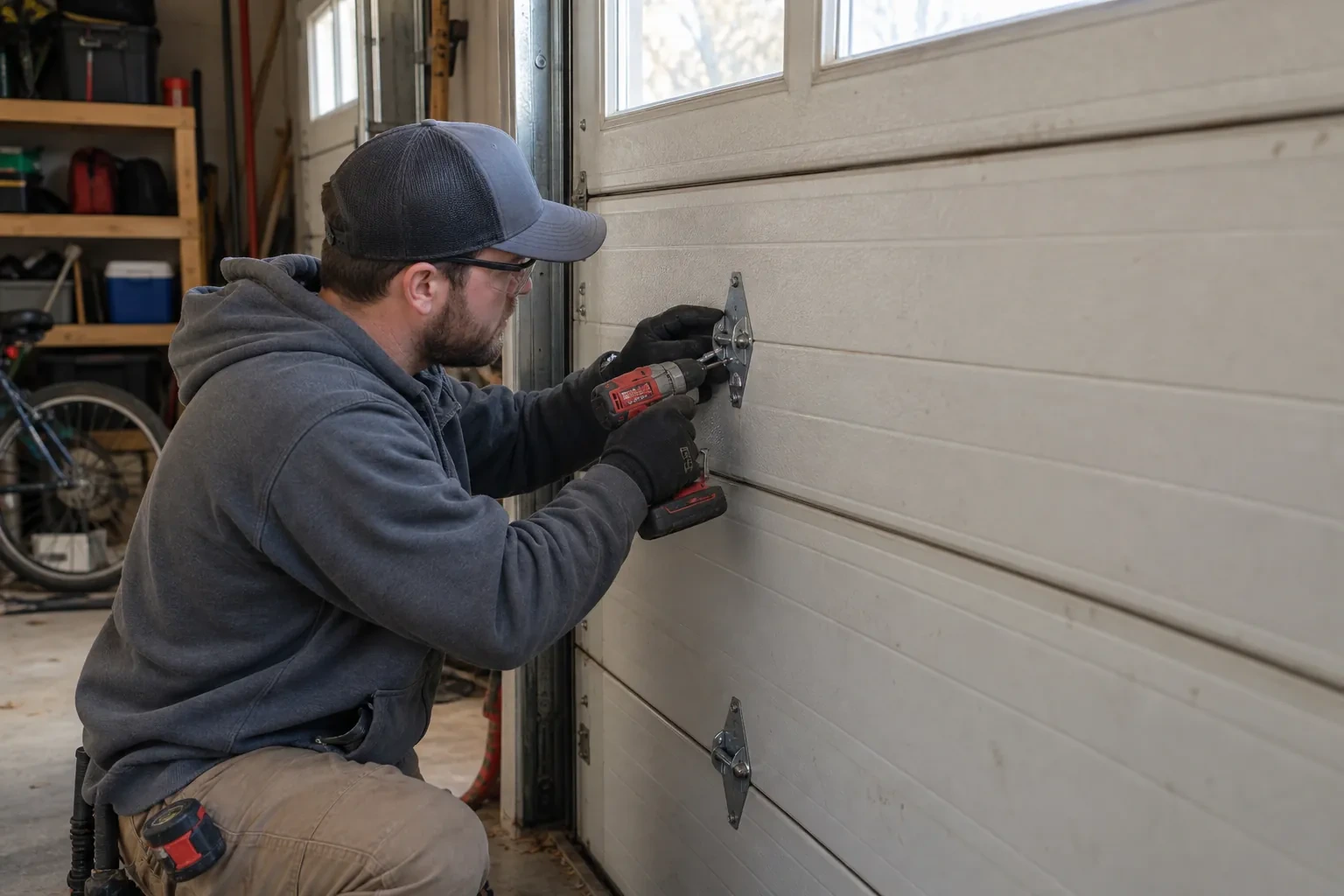
A cable that unwound or crossed on its drum is stripped back and rewound in its groove, beginning at the cable stop and laying each turn beside the last. Both cables are set to equal length so the bottom section hangs level, then the drums are locked to the shaft and the springs are rewound to the door's weight. A cable with kinks, rust or broken strands is replaced along with its partner so the two sides age together. This part of the work is done with the door clamped fully closed and the sections held, because a cable coming under tension is exactly when a door wants to move.
Scene 3
The visit closes with a plain explanation of what let the roller go: an impact, a cable that slipped, ice on the threshold, a worn wheel or a bracket that had pulled from the wood. You are told what was reset, what was replaced and what was adjusted, and whether anything was left for a later decision, such as tired springs or a section with a crease that still works but will not improve. Knowing the cause is what lets you prevent a repeat, and it gives you a clear record if the door is ever assessed again or if an insurer asks what a vehicle strike involved.
What shapes the quoteDownsview Door Specialists
FeesSame any hour
A door that sits tilted almost always has a lifting cable that has gone slack, unwound from its drum or broken on the low side. The springs are still pulling on the other side, which is why the door racks and the rollers escape. Leave it where it is; levelling it means handling the springs and rewinding both cables evenly, which is done with the door clamped and the tension controlled.
Rollers turn thousands of times a year while carrying part of the door's weight, and their small ball bearings wear, fill with grit or fall out. Nylon tires can crack and steel wheels can wear flat spots or grind down to the stem. A worn roller squeals, wobbles in the rail or lets the door shudder at the curve. Replacing them as a set restores a quiet door and removes a common cause of a roller dropping out.
Keep children and pets out of the garage, do not press the wall button or a remote, and do not try to push or pull the door. If the door is fully closed and the opener is still trying to move it, unplug the opener. Move anything valuable out from under the door if you can do so without touching it. A photograph of the door from a safe distance is helpful to show how it was sitting.
TorontoOntario
Off-Track Garage Door Reset · Downsview, North Park
Every square is one home in a hundred.
On-site assessment
There was a loud bang from the garage, then silence.
(289) 236-6217, open 24/7.
On-site assessment preferred · (289) 236-6217, open 24/7