Skip to content
DownsviewDoor SpecialistsOpen 24/7 (289) 236-6217
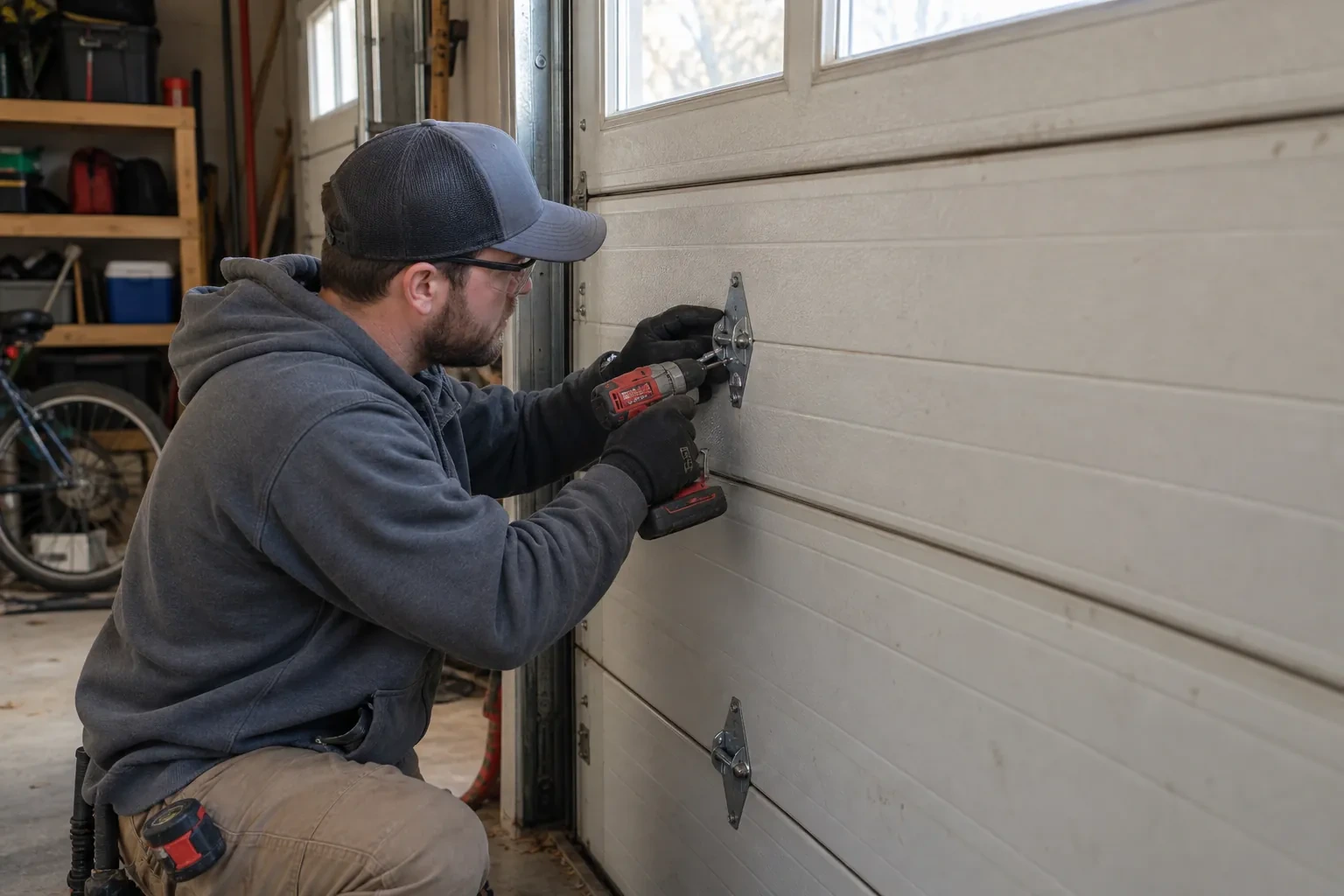
Technician kneeling in a blue cap, fastening a metal hinge plate to a gray ribbed door panel with a red drill.

Openers · Toronto

Emergency Release Repair

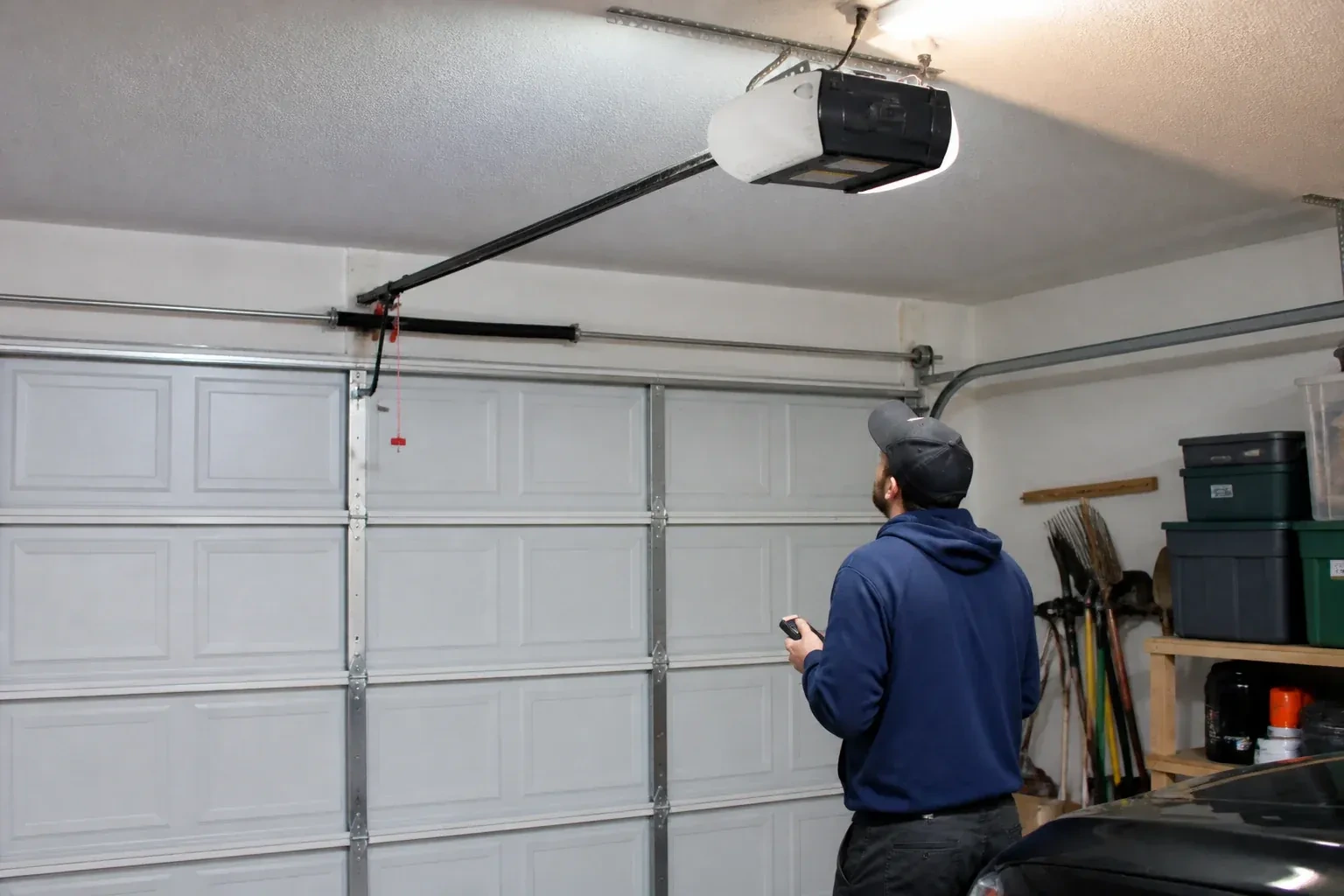
Someone pulled the cord last spring to get a car out during an outage, and the door has never properly rejoined the opener. Press the button and the trolley glides along the rail by itself while the door stays exactly where it is.

In plain words

The operator standard for residential openers in this country asks for a manual release that is coloured red, easy to tell apart from the rest of the mechanism, and reachable from the floor, with the handle no more than about 1.8 metres up. The reason is plain: in an outage or emergency, someone who has never touched the opener must be able to find and use it. Emergency release repair brings an opener back to that standard when the handle has gone missing, been tied out of reach, or was left too high after a door change, and leaves the household knowing what the red handle is for.

Sound familiar?Toronto

The call
The power went out in the middle of an ice storm, the car is inside, and when you reach up for the red handle there is nothing there. A frayed stub of cord hangs from the trolley, well above your fingertips, and the door sits shut.
NextHow the visit goes

Emergency Release Repair · Toronto

How the visit goes

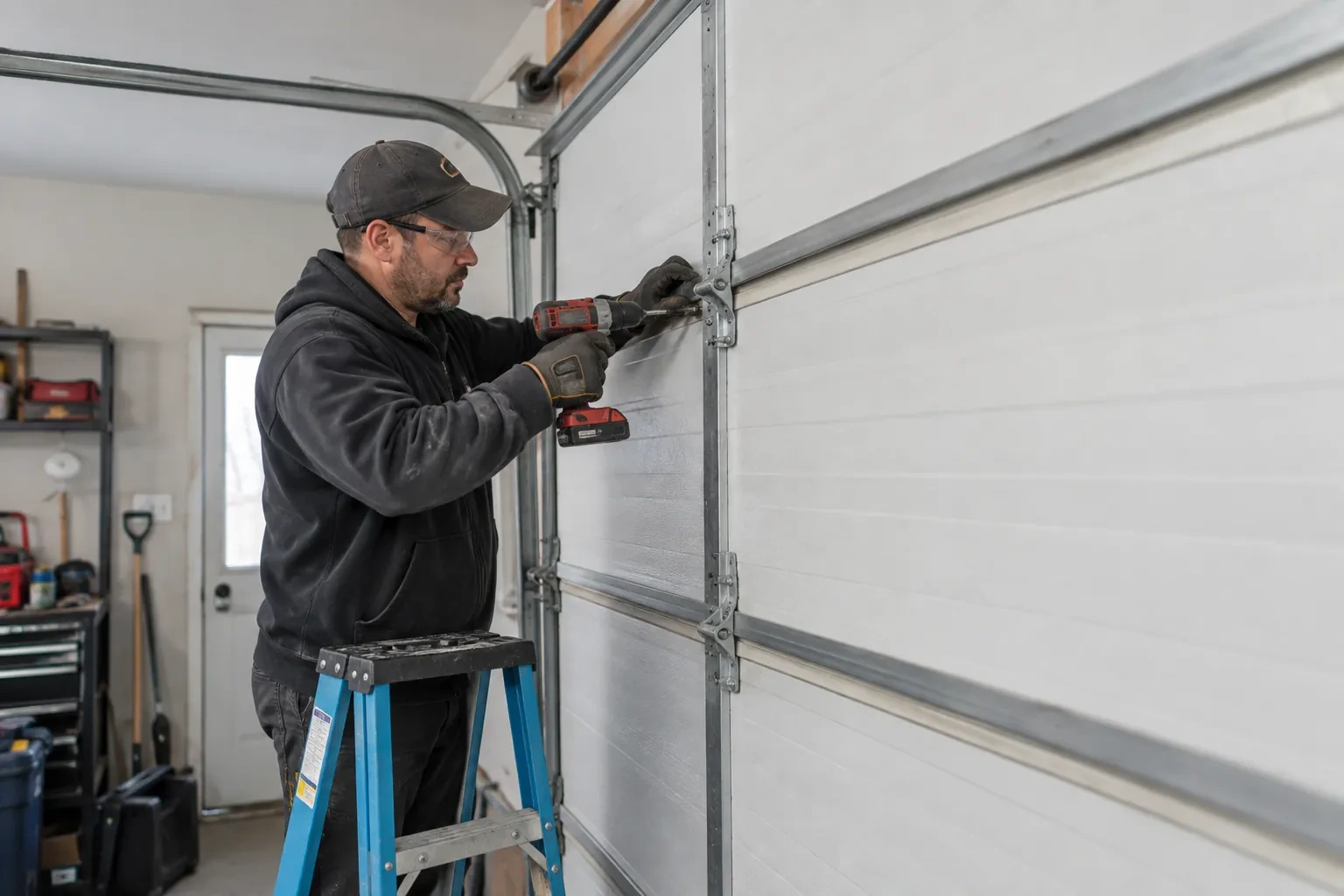
Technician on a blue ladder using a red cordless drill at a steel hinge on a white sectional garage door.
  1. Scene 1

    Door closed before anything is touched

    The first thing the technician does is get the door into a safe state. If it is closed, it stays closed while the release is examined. If it is stranded open or part-way, the door is supported and clamped, with the opener unplugged, before anyone reaches for the lever, because a door that is free of its opener is held only by its springs and an unbalanced one can move on its own. This is the same rule the industry checklist gives homeowners: disconnect with the door closed and keep the opening clear, since even a closed door can shift once free of the opener. Starting here keeps the risk low until someone decides to move the door.

  2. Scene 2

    Lever and spring on the trolley

    When the lever throws but will not return, or returns without latching, the fault is in the lever, its pivot pin or its spring. The technician removes the trolley cover, replaces the spring or the lever assembly with the part for that model, and checks that the lever swings cleanly from horizontal to vertical and back with a firm click. A bent lever is replaced rather than straightened, since the metal has already been stressed once. With the door closed the release is pulled and reset several times to confirm the trolley lets go and re-engages each time before the opener is run.

  3. Scene 3

    Battery backup and outage-prone streets

    If your street loses power a few times each winter, the technician may raise battery backup. Modern openers can carry a battery that opens and closes the door on stored power, which spares you the release altogether in most outages. The battery is a wearing part, generally replaced every few years, and the head unit signals when it is tired. The release remains the fallback when the battery is flat or the opener itself has failed, which is why both are kept in working order. You leave knowing which of the two your household relies on and how each one is checked.

In the van

  • Hole saw for the top section
  • Door arm, clevis pins and clips
  • Garage door lubricant
  • Release cable and clips
  • Track clamps to hold the door

What shapes the quoteDownsview Door Specialists

Outside key release: repair or new
Renewing a cylinder, cable or keys on an existing outside release is one line; cutting the door and fitting a complete kit where none exists is another, and both are named separately.
Battery backup as an option
If outages are the reason you called, a battery backup pack for a compatible opener may be offered alongside the release repair. It is optional and appears as its own item.
Damage from a door that dropped
A release pulled on an unbalanced open door can bend the arm, the carriage, a bracket or a panel. Anything that took the impact is listed on its own once it has been seen.

FeesSame any hour

Have it ready

Before you call · 0 / 3

(289) 236-6217

Straight talk

Why should the door be closed before I pull the handle?

Because once the trolley lets go, the door is held only by its springs. A well-balanced door will stay put wherever it is, but a door whose springs are tired can drop, and one that is over-tensioned can rise on its own. Even with the door already on the floor it can still move unexpectedly, so keep the opening clear whenever the release is pulled. The industry checklist and opener makers give the same instruction: disconnect with the door fully closed.

How long does an emergency release repair take?

A cord and handle, a lever spring or a trolley freed from the stop bolt is a modest part of an hour, including the balance test and reversal tests. Replacing a trolley or fitting an outside key release takes longer, since the drive is slackened and re-tensioned or a hole is cut in the door. If the balance test finds the springs need work first, that is a separate piece of the visit, and you are told before it starts.

My door lets go of the opener partway through travel. Why?

A release lever that is only half-latched will hold until the door's weight shifts, then drop out. That points to a weak or missing lever spring, a bent lever, or worn latch teeth on the trolley. It can also follow a hard pull on the cord that left the lever cocked. The fix is a new spring or lever, or a new trolley, and a check that the door is balanced so the trolley is not carrying more than it should.

Torontoinformation

TorontoOntario

Emergency Release Repair · Downsview, North Park

Town
Toronto
In business
29 years
Hours
Open 24/7
Nights, weekends and holidays, same fees
Visits
On-site assessment preferred. Request a visit or call.

2021 census: what it means at the door

Every square is one home in a hundred.

  • 58 in 100 homes · older homes
  • About 58% of homes in Toronto were built in 1980 or earlier, according to the 2021 Census.In a mature neighbourhood the garage door is often the single largest feature of the front elevation, so keeping the original look matters. Modern insulated doors come in raised-panel and carriage styles that echo the older designs while running on today's torsion hardware.
  • Single-detached houses make up about 23% of homes in Toronto (2021 Census).Where housing is mostly attached, the common garage entrance may be a rolling grille or heavy sectional door with access by fob or remote, managed by the property. We service these operators, safety edges and photo-eyes, and coordinate with management so residents keep their access throughout.

Source: Statistics Canada, Census Profile

Open Toronto in Google Maps

On-site assessment

Request a visit.

Someone pulled the cord last spring to get a car out during an outage, and the door has never properly rejoined the opener.

(289) 236-6217, open 24/7.