Sound familiar?Toronto
- The call
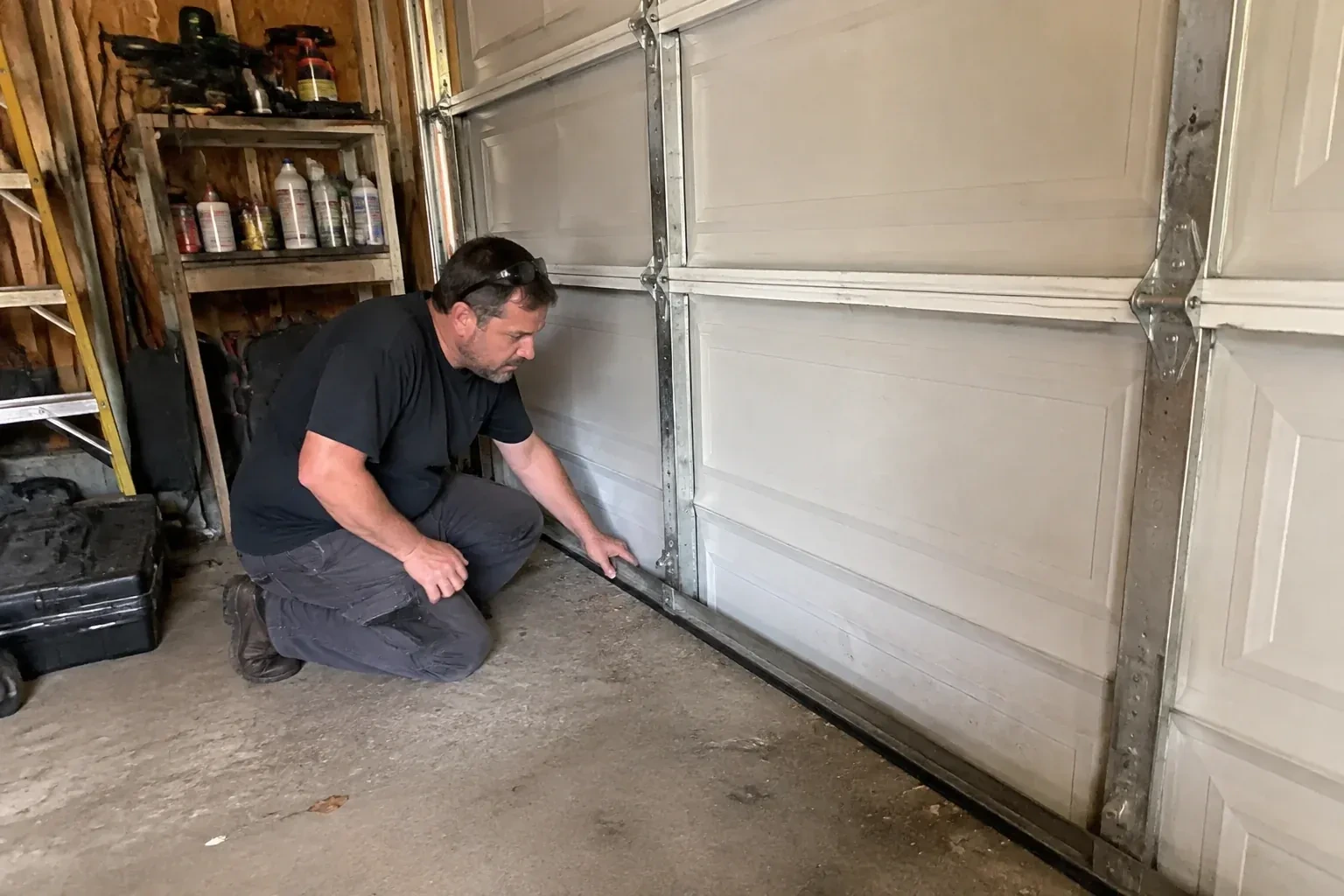
- A bang like a dropped toolbox came from the garage last night. This morning one of the long springs beside the track hangs in two pieces, and the door will only rise a few inches before the opener gives up and stops.
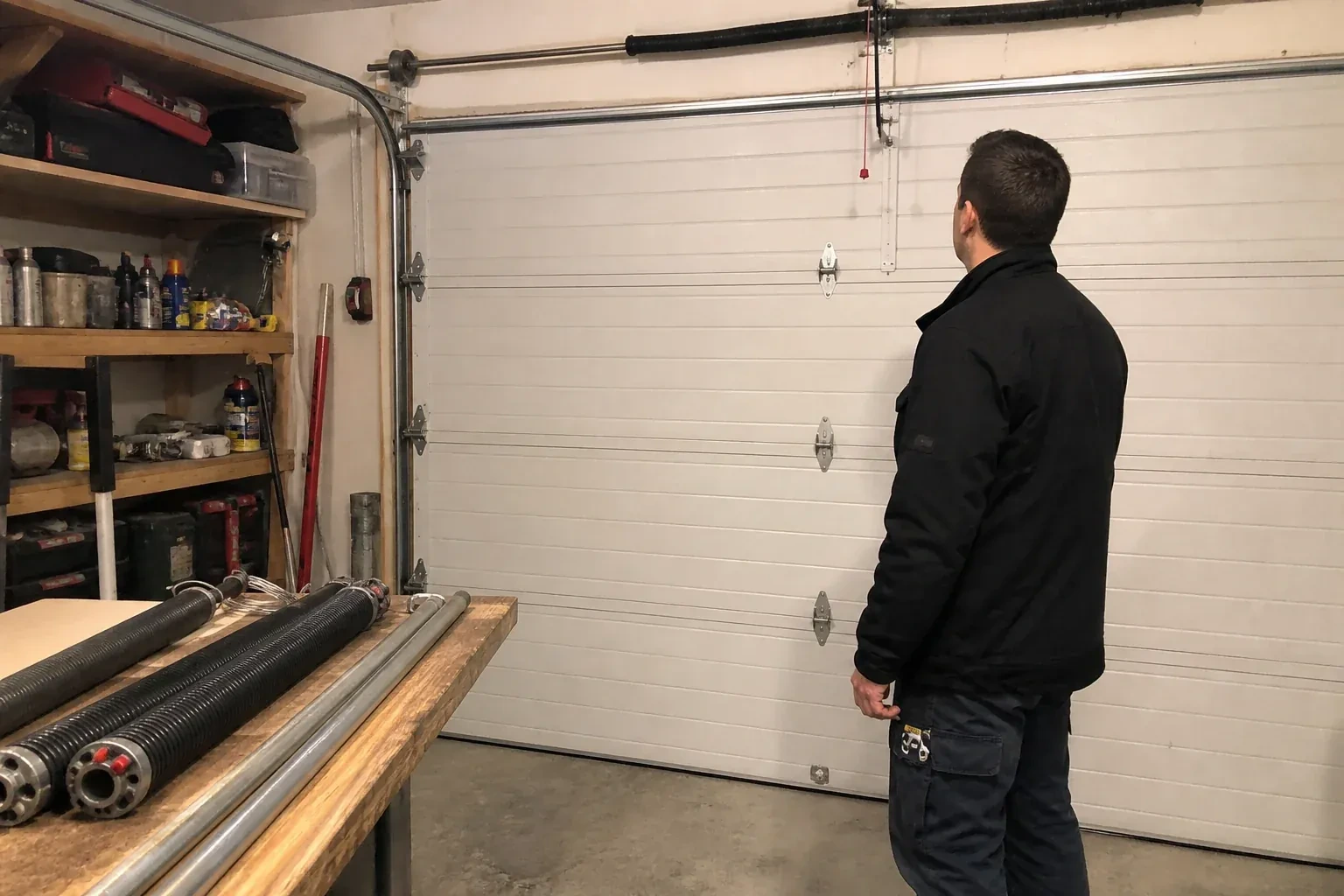
The opener groans on the way up and the door slams the last foot on the way down, hard enough to rattle the windows. The motor is the same one it always was; something in the springs has stopped doing its share.
When one extension spring breaks, the other is replaced with it. The two springs were fitted together, have stretched the same number of times and have rusted in the same air, so the survivor is near the end of its life. More importantly, a door balances only when both sides pull equally; a new spring paired with a tired one lifts one corner ahead of the other and twists the door. Fitting a matched pair rated for the door's weight lets the technician set both sides to the same hook position and hand back a door that rises level and holds where it is left.
Sound familiar?Toronto
Extension Spring Replacement · Toronto
Scene 1
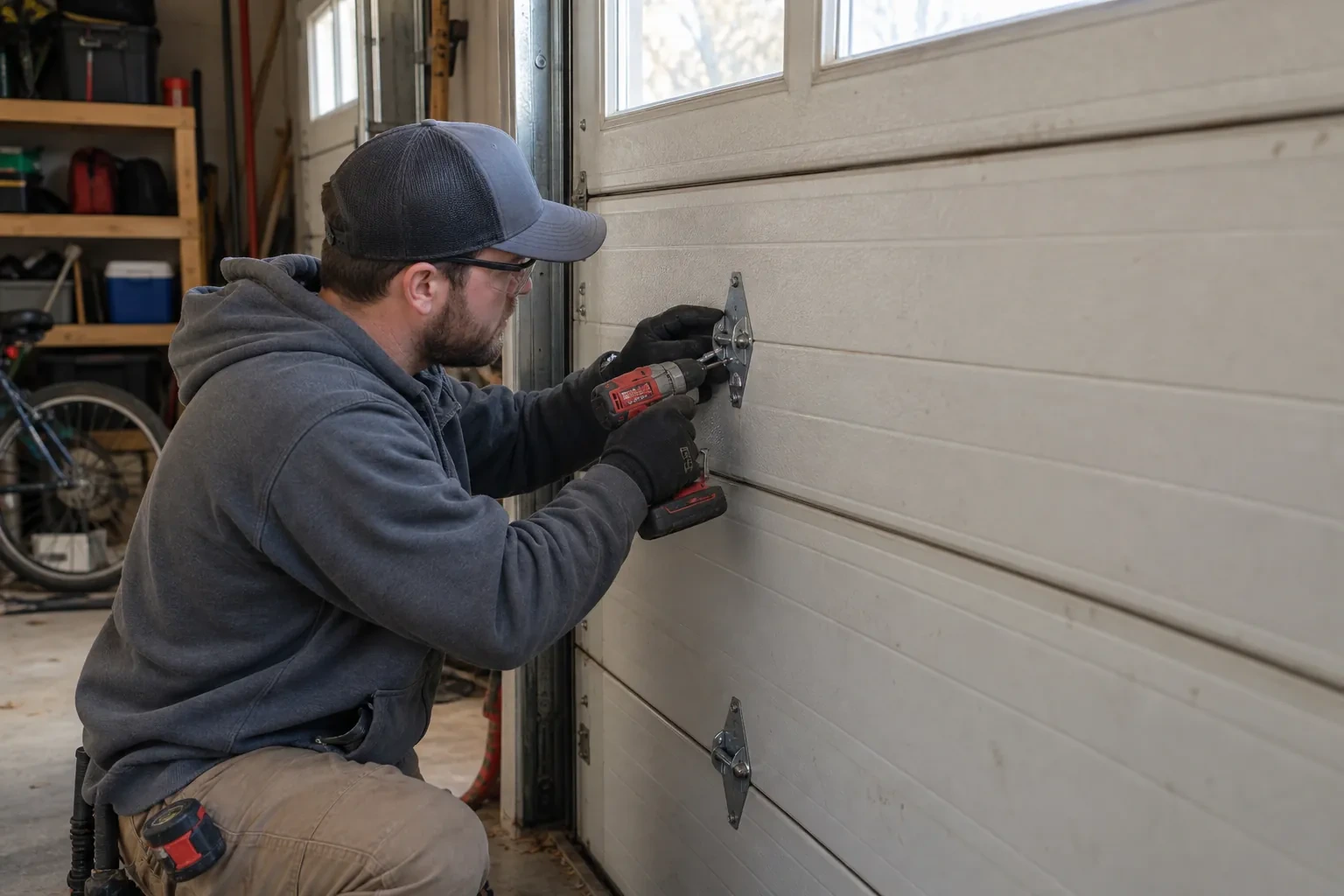
A spring rarely fails on its own, so the first look ends with the door it was lifting. The technician checks the rollers for cracked wheels and bent stems, the hinges for splits, the track for a bend or a bracket pulled off the jamb, and the bottom section for a dent that catches. The opener's force setting is noted, since an opener turned up to compensate for tired springs will overpower the new ones. And the history matters: a door recently fitted with insulation panels or windows weighs more than the springs were chosen for, and a door that has been closed onto snow or a bin has had its cables jolted.
Scene 2
Each lift cable starts at the bottom bracket, where its loop goes over the pin or is secured with a clevis pin. From there it runs up the vertical track, over the fixed pulley at the front of the horizontal track, back along the track to the pulley on the end of the spring, around it, and forward again to the S-hook or adjusting clip at the front hanger. The technician keeps the cable seated in each pulley groove and makes sure it passes on the correct side of the containment cable and the track. Cables are renewed if the old ones showed any fraying or rust, and always as a pair of the same length.
Scene 3
Your door now has a cable running through the middle of each spring, anchored at the back hanger and at the front of the track. It carries no meaningful load while the springs work, though a trace of slack as the door cycles is normal. Its job begins only if a spring ever breaks, when it holds the pieces on the cable instead of letting them fly. It should not be removed, used to hang anything, or tied back to the wall. If it ever looks badly slack, frayed or pulled from its anchor, call to have it corrected promptly rather than waiting for a routine visit. A home inspector looks for this cable when a house is sold.
What shapes the quoteDownsview Door Specialists
FeesSame any hour
Springs are rated in cycles, one cycle being a full open and close, and a standard set is built for a number in the ten-thousand range. A door used four times a day gets through that in several years; a door used a few times a week takes far longer. An unheated, damp garage shortens the figure through rust. Regular lubrication and a door kept in balance stretch it out.
Sometimes, and it is worth asking. A torsion system needs room above the door opening for its shaft and a header that can carry the spring bracket, which many older garages with a low ceiling simply lack; extension springs are there for that reason. Where the headroom exists, a conversion is a separate job with its own hardware and quote. The technician can tell you on the spot which route suits your garage.
It is put right as part of the job. The rear hanger takes the full pull of the spring on every cycle, and lag screws driven into thin plywood, a split joist or drywall work loose over the years, which is often why a door slowly goes out of balance. The technician re-fixes the hanger with fresh lag screws into solid framing, or adds a length of angle iron to reach it, before the new springs are hung.
TorontoOntario
Extension Spring Replacement · Downsview, North Park
Every square is one home in a hundred.
On-site assessment
The opener groans on the way up and the door slams the last foot on the way down, hard enough to rattle the windows.
(289) 236-6217, open 24/7.
On-site assessment preferred · (289) 236-6217, open 24/7