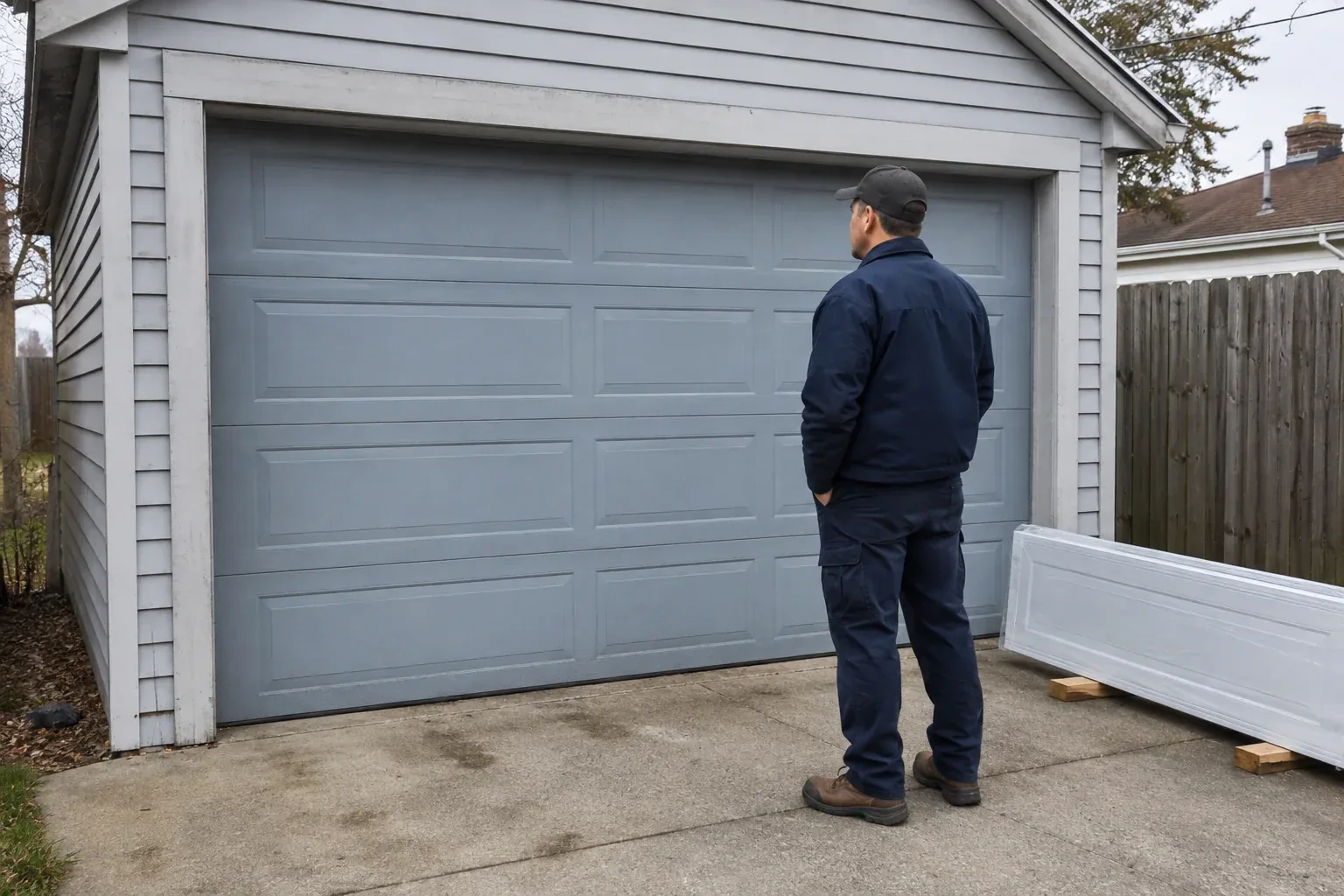
Sound familiar?Toronto
- The call
- A lift truck clipped the lower curtain during unloading. Now two slats are bowed, an endlock catches halfway up, and each attempt to cycle the door pulls the damaged section farther toward one guide.
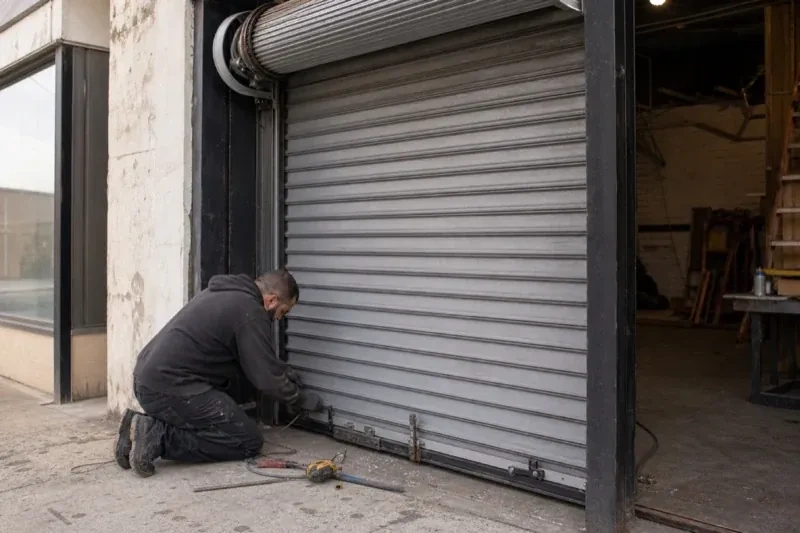
A lift truck clipped the lower curtain during unloading. Now two slats are bowed, an endlock catches halfway up, and each attempt to cycle the door pulls the damaged section farther toward one guide.
A labelled rolling fire door is both an operating door and part of a fire separation, so its identity shapes the repair. Labels, curtain construction, guides, release hardware and the closing path are recorded before component choices are made. Parts and procedures must suit the listed assembly, while inspection, release testing and documentation remain visible in the scope. The normal operating function is checked alongside the applicable fire-door sequence. This produces a repair record the facility can retain with its fire-safety information and keeps unrelated alterations from being folded casually into routine rolling-door work.
Sound familiar?Toronto
Commercial Rolling Door Repair · Toronto
Scene 1
The first clues come from the people who use the opening. The technician asks whether the change appeared after an impact, power interruption, cold night or gradual increase in noise; where the curtain stops; which control was used; and how many cycles the door normally sees. Staff can also point out a lock that sticks, a manual chain that has become heavy or a sensor that needs repeated cleaning. That history narrows the inspection before any cycling begins and distinguishes a one-time obstruction from wear that has been developing across the whole assembly.
Scene 2
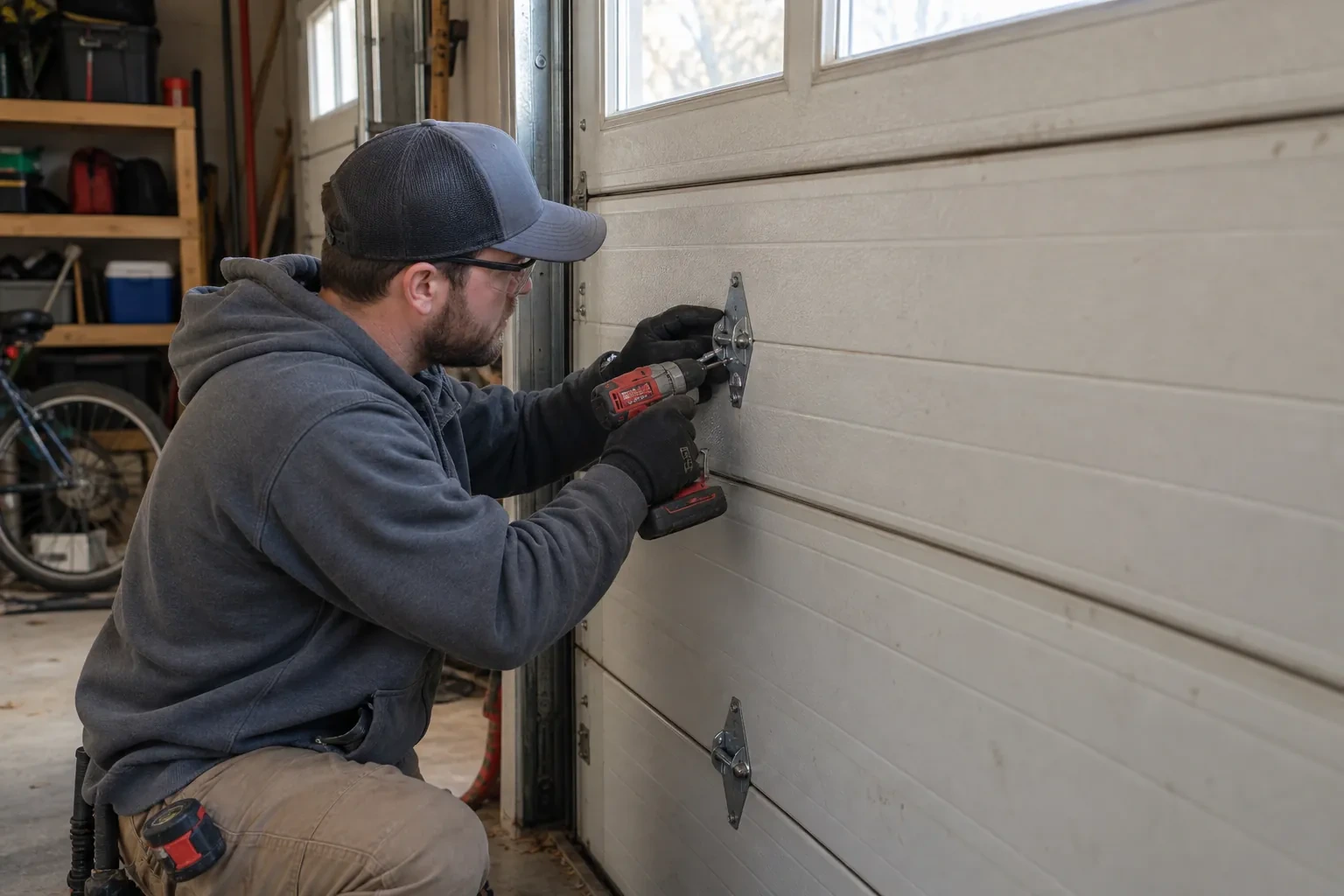
Repair starts by establishing a stable mechanical state. Power is isolated under the site's procedure, the operating controls are kept from use, and the work zone remains controlled. Depending on position and construction, the curtain is lowered, clamped, blocked or supported with suitable lifting equipment before a guide, bracket or drive part is loosened. Manual chains are secured and counterbalance components are treated as energised. This setup gives the technician control over weight and movement, allowing later adjustments to be deliberate. It also protects nearby stock and equipment while the opening is temporarily out of normal service.
Scene 3
The completed service record becomes the starting point for routine door care. It can list the installed door and operator, repaired components, observed wear, test results and the manufacturer's inspection interval. Facility checks focus on visible conditions: new rub marks, loose fasteners, damaged slats, uneven bottom-bar position, frayed wiring, dirty sensor faces and changes in sound or operating effort. Spring tension and internal repairs remain technician work. Scheduling periodic inspection around the actual cycle count, exposure and manufacturer guidance makes future conversations specific and allows small changes to be compared with a known condition.
What shapes the quoteDownsview Door Specialists
FeesSame any hour
The door may be binding in a guide, held by a lock, poorly balanced, disconnected from part of the drive or affected by a slipping sprocket, chain or key. The operator itself may also have a brake or internal drive fault. Mechanical movement is checked before settings are changed so the motor is not used to overcome resistance.
A broader operator plan may be considered when major drive or control parts are extensively worn, suitable components are no longer supported, the unit is mismatched to the door or duty, or the desired control arrangement requires a different system. The door's balance, size, cycle pattern, protection devices, power and manual operation all inform that decision.
A rolling door uses interlocking slats or a flexible sheet that coils around a barrel above the opening. A sectional door uses hinged panels that travel along horizontal or vertical tracks. Their guides, counterbalance arrangements, clearances and repair parts differ, so identifying the construction before service is an important first step.
TorontoOntario
Commercial Rolling Door Repair · Downsview, North Park
Every square is one home in a hundred.
On-site assessment
A lift truck clipped the lower curtain during unloading.
(289) 236-6217, open 24/7.
On-site assessment preferred · (289) 236-6217, open 24/7