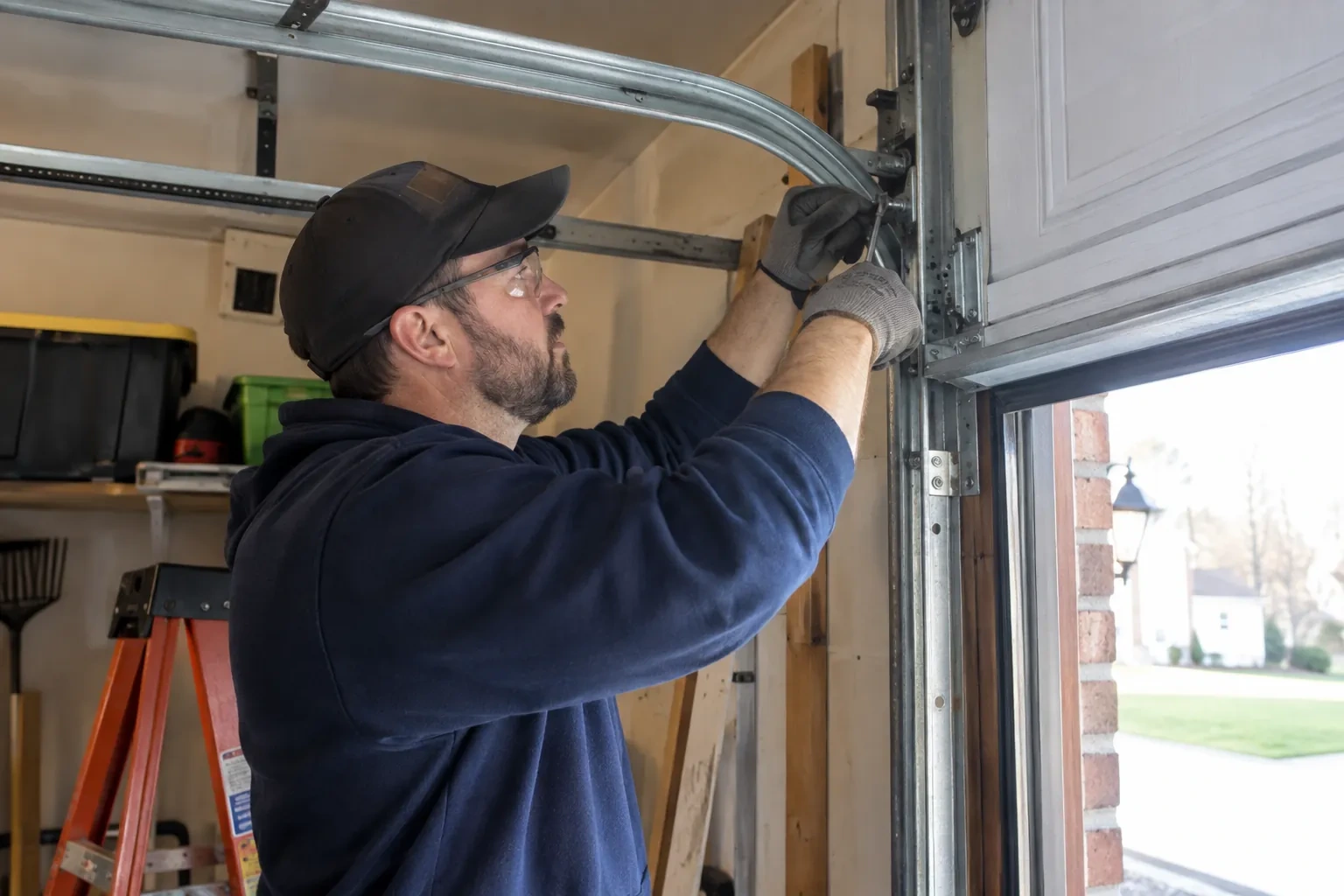
A door that gets a little attention lasts much longer. The tips here take a few minutes each and cover the checks and habits that keep springs, rollers and openers in good shape.
- Bulletin 1Garage Door Opener Replacement: reading the quoteMove vehicles out onto the driveway, bring any car that needs its built-in buttons programmed, and clear the floor under the door's path and the area beneath the old opener and rail so ladders can stand safely. Take…Read
- Bulletin 2Garage Door Opener Diagnosis and Repair: getting readyThe door stops partway up for no reason, or opens fine and then refuses the next time. Some days the keypad works and some days it does not.Read
- Bulletin 3Garage Door Roller Replacement: what the visit coversWinter is hard on rollers. Slush carried in on the tires freezes in the foot of the track, wheels skid across the ice instead of turning and wear flat spots, and salt eats into steel stems and bearings at the lowest…Read
Straight talk
Repair & Maintenance
How long does the visit usually take?
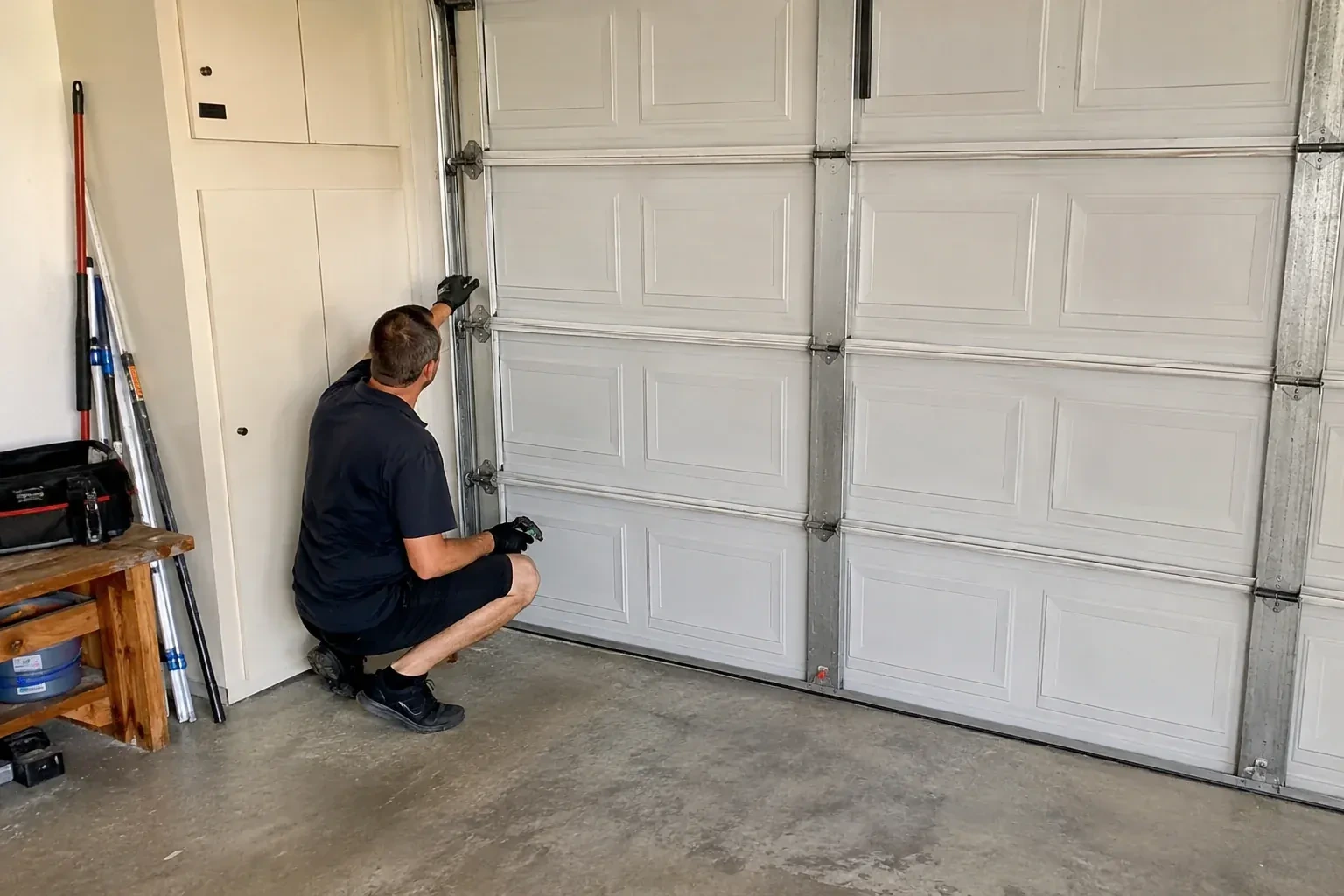
Plan for roughly an hour for a single door in ordinary condition, and longer for a double door, a second door on the property, or a door with a history that needs following up. Maintenance done on the spot adds a few minutes. A post-impact assessment, where the technician traces the force through the hardware, takes longer than a routine check. You are told at the door if the scope is growing. Garage Door Safety Inspection
What kind of doors and openers do you service?
Residential sectional doors of every common construction: steel, insulated steel, aluminum and glass, wood and composite, single and double width, with torsion springs above the header or extension springs beside the horizontal tracks. Openers of all the usual types are covered too, including chain drive, belt drive, screw drive and wall-mounted jackshaft units. If the door is a one-piece tilt-up or a commercial rolling door, mention that when booking so the right hardware comes along. Garage Door Tune-Up
One side of my door hangs lower than the other. What does that mean?
A door that sits tilted almost always has a lifting cable that has gone slack, unwound from its drum or broken on the low side. The springs are still pulling on the other side, which is why the door racks and the rollers escape. Leave it where it is; levelling it means handling the springs and rewinding both cables evenly, which is done with the door clamped and the tension controlled. Off-Track Garage Door Reset
How should I look after the door after the section is replaced?
A little routine goes a long way. Each month, look along the hinges for loose screws, spin the rollers, and check the door's balance by lifting it by hand with the opener disconnected. Twice a year, apply a light garage-door lubricant to hinge pivots, roller stems and springs, and keep the tracks clean and dry. Rinse salt off the lower sections in spring, touch up chips, and keep the bottom seal clear of ice in winter. Garage Door Panel Replacement
Springs & Hardware
Will new rollers make my door quieter?
Usually, and often dramatically. Rollers are the only part of the door that touches the track, so most of a door's clatter starts there. Moving from worn steel or bare plastic wheels to nylon ball-bearing rollers changes the sound more than any other single part. The rest of the quiet comes from the same visit: hinges lubricated, loose bolts tightened, the track squared so nothing rubs. Springs can still squeak on their own, and the technician can treat those separately. Garage Door Roller Replacement
What information helps when I book the visit?
Whether the door is closed, open or stuck; where the noise or the gap appears and roughly how high; whether you can see a cracked, bent or loose hinge and whether it is at the edge or the middle; whether the door is a single or a double, steel or wood, and how many panels it has; and whether anything hit the door lately. A photo of the hinge and its stamped number is useful. Garage Door Hinge Replacement
Should the track be lubricated?
It depends on the door, and manufacturers disagree, which surprises many people. Some want the track kept clean and dry, since lubricant there can collect grit and let the wheels skid instead of roll, wearing the roller and the track edge; others specify lubricant at the track bend. The moving parts, roller bearings, hinge pins and springs, get their own lubricant either way, in the type the manual specifies, with a few cycles of the door to spread it. Garage Door Track Repair or Replacement
How do I tell a cable problem from a spring problem?
Look above the door with it closed. A torsion spring that has broken shows a clear gap in the coil, and both cables usually go slack together because nothing is turning the shaft. A cable problem tends to show on one side only: a frayed length, a coil of loose cable, or one corner sitting higher. Either way the technician inspects both, since a weak spring is a common reason a cable fails. Garage Door Cable Replacement
Openers & Access
What do the blinking lights on the opener mean?
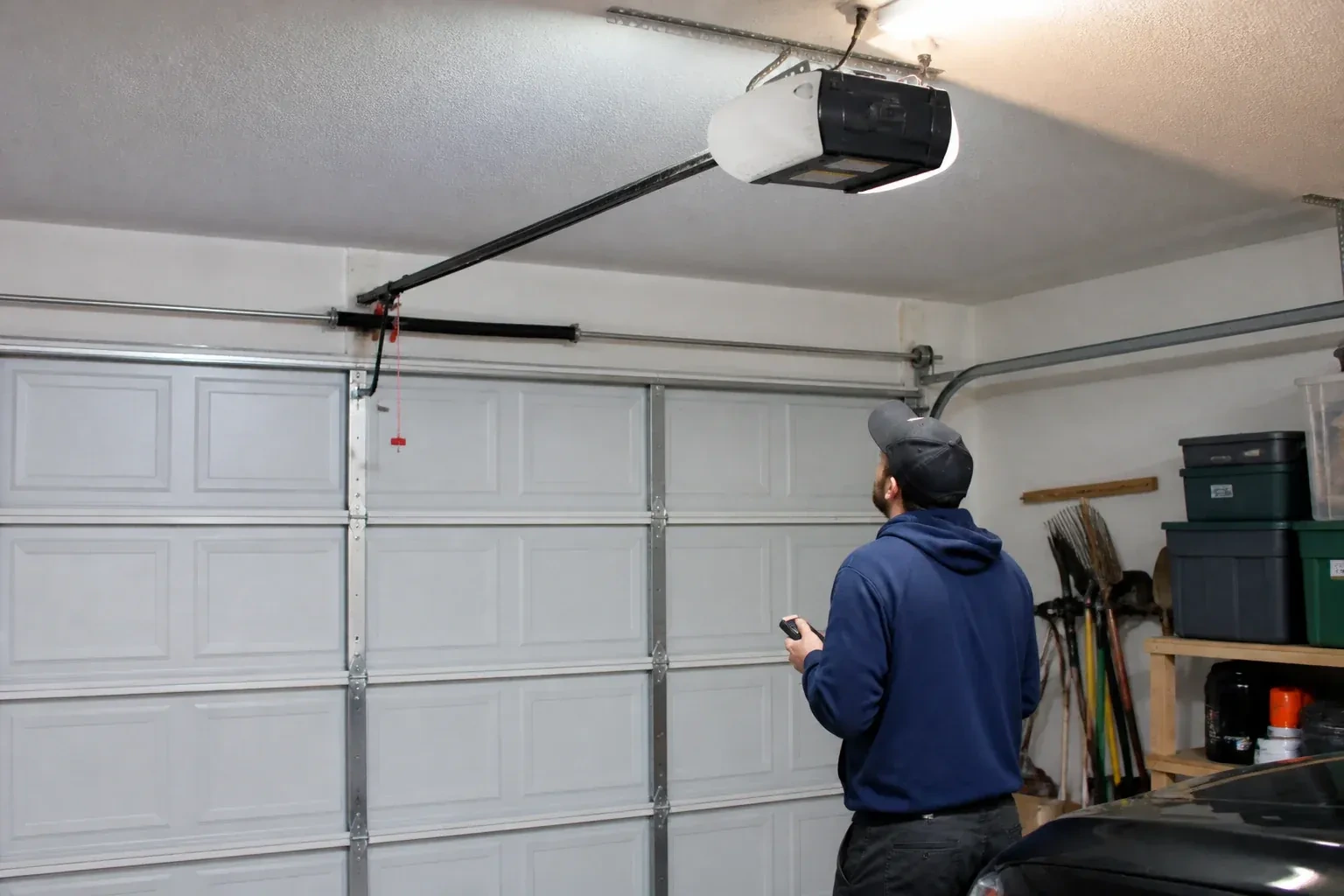
They are a diagnostic code. On openers made in roughly the past fifteen years, the head unit flashes its lights, or a pair of up and down arrows, in a counted pattern such as one flash then five. Each pattern corresponds to a fault family on the maker's chart for that model: sensor circuit obstructed or open, motor commanded but not moving, more force than allowed. The technician reads the pattern, then confirms it by hand, since one fault can imitate another. Garage Door Opener Diagnosis and Repair
How do I know whether my opener is a chain drive?
Look along the rail from the motor head to the door. A chain drive shows a steel roller chain, like a heavier bicycle chain, running along the top or inside a channel of the rail and over a toothed sprocket on top of the head. A belt drive has a flat rubber belt in the same place, and a screw drive has a threaded steel rod inside the rail with no chain or belt at all. Chain-Drive Opener Repair
The motor runs but the door stays still. What has happened?
Something between the motor and the door has let go. On a belt drive the usual suspects are a broken clip where the belt joins the trolley, a belt that has jumped off the sprocket or idler pulley, a trolley that failed to re-engage after the red cord was pulled, or a stripped drive gear inside the motor head, which leaves plastic shavings on the housing. Each is a specific repair. Belt-Drive Opener Repair
Why does the technician test the door by hand before anything else?
Because the opener depends on the springs. With the old unit disconnected, a balanced door lifts with moderate effort and stays put at roughly waist height. A door that drops or drifts is telling the technician the springs need adjusting, and doing that first means the new operator is never asked to haul a heavy door, which would shorten its life and mask a problem that belongs to the door. Garage Door Opener Replacement
Installation & Upgrades
What makes a sectional door different from a one-piece door?
A sectional door is built from horizontal panels joined by hinges. Rollers guide those panels up vertical track, around a curve and into horizontal track overhead. Because the sections bend at their joints, the door can travel close to the ceiling rather than swinging outward as one rigid slab. Sectional Garage Door Replacement
Why are new springs selected for the replacement door?
Counterbalance springs are chosen around the completed door's weight, height, track arrangement and intended travel. Insulation, steel skins, windows and reinforcement all contribute to that load. A spring combination from a different assembly may provide unsuitable torque even when it physically fits. Matching the counterbalance to the ordered door supports manageable manual movement and orderly cable travel. Insulated Steel Garage Door Installation
Can two single doors be replaced with one wide door?
Yes, as a coordinated renovation. The centre support, new header or beam, side jambs, electrical routing, and finished opening are building-work considerations, while the sectional door needs suitable clearances, pressure criteria, reinforcement, tracks, and attachments. Structural design and door selection should be aligned before materials are ordered so each trade works to the same dimensions. Wind-Rated Garage Door Replacement
What happens if the garage floor is not level?
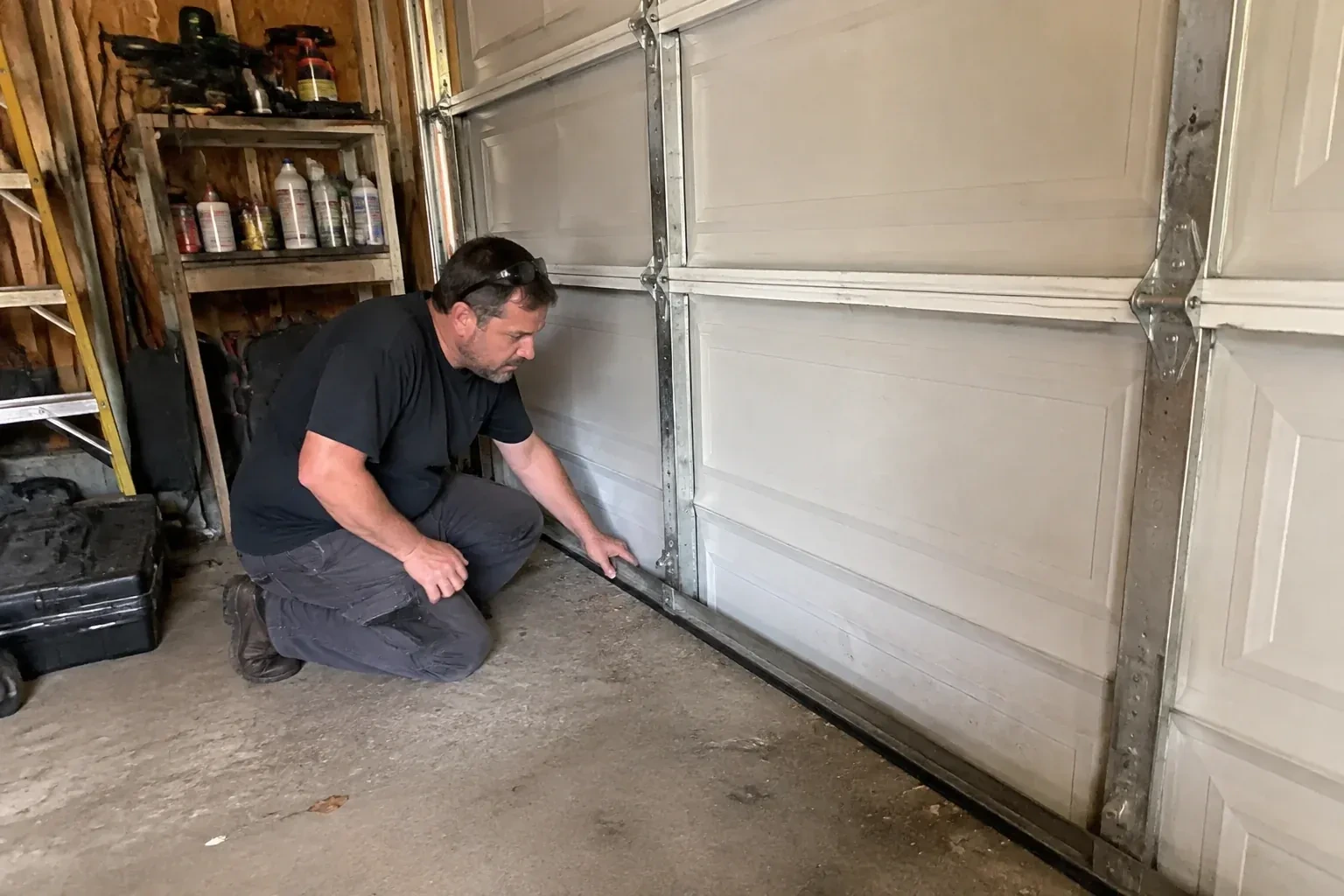
The survey measures the variation and determines how the bottom section and seal can meet it. A flexible astragal can accommodate modest changes, while a pronounced crown, dip or damaged threshold may call for related floor or threshold work. The door itself is installed level for reliable travel; the sealing approach is selected separately to follow the practical shape of the floor. Carriage-House Garage Door Installation