Sound familiar?North Park
- The call
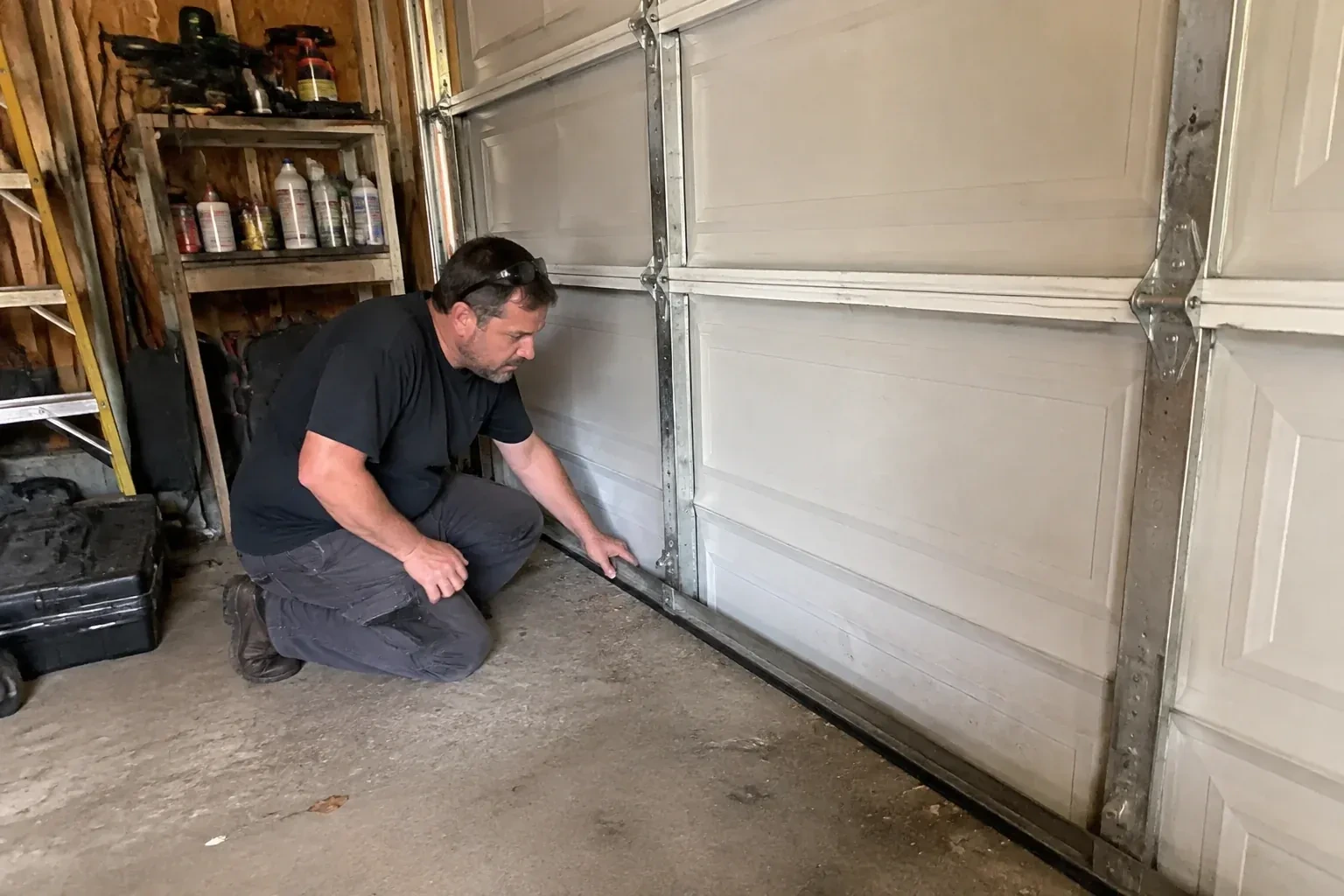
- Someone left the snow shovel leaning in the opening and the door came down on it. Now a loop of steel cable hangs loose beside the track and the door refuses to close the last few inches.
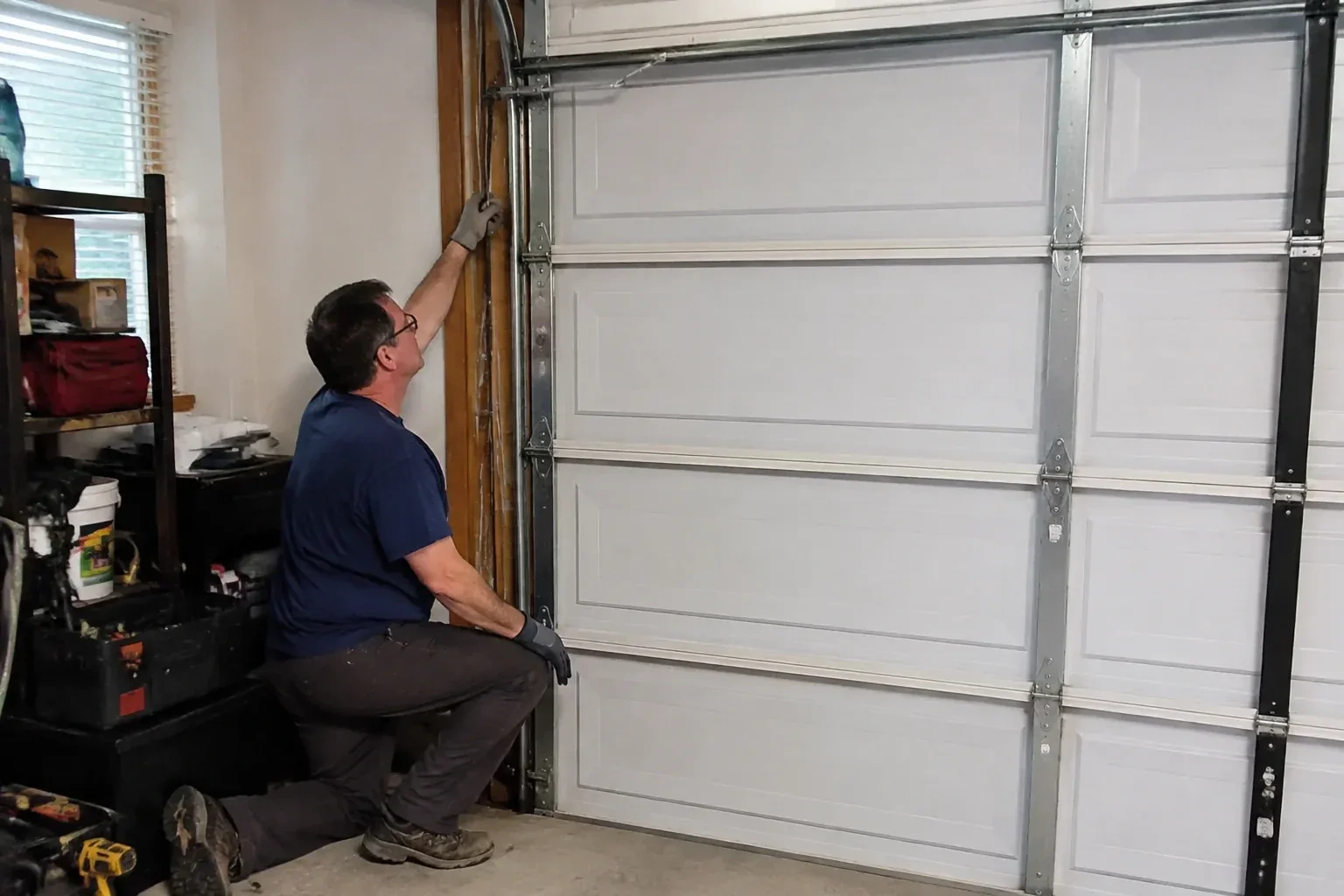
Winter is hard on the bottom of a garage door. Slush and road salt run off the car and pool exactly where the cables loop onto the bottom brackets, and wire rope that is wet and salted for four months a year rusts from the inside out. Snow packed under the door can also stop it short, letting the cables go slack and slip their drums. Cable replacement puts fresh galvanized cable on both sides, cleans or renews corroded brackets and resets the balance, and the technician can show you how a clear threshold and a light coat of lubricant carry the new set through many more winters.
Sound familiar?North Park
Garage Door Cable Replacement · North Park
Scene 1
Nothing is touched until the door cannot move. The technician pulls the opener's release cord so the motor is out of the picture, clears the opening, and clamps the track just above a roller or props the door if it is jammed partway. If one cable has let go, the door is probably tipped and binding in the track, with its weight resting unevenly on the remaining cable and spring, so the first job is to take that weight on clamps or a support. Only then does the assessment of drums, springs and brackets begin. This step is calm and deliberate, and it is what allows every later step to be done with both hands.
Scene 2
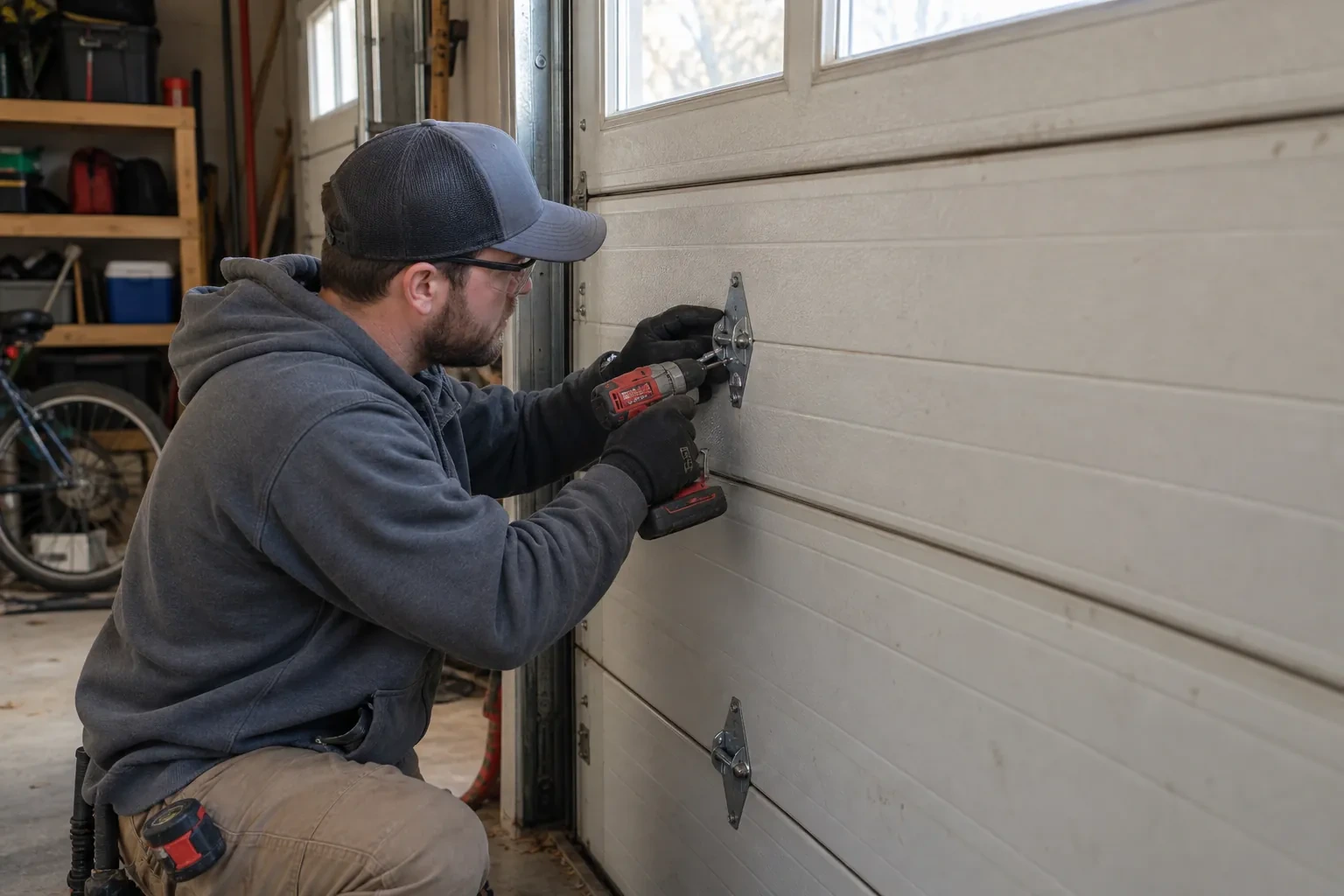
The torsion springs are wound back up with the winding bars, a quarter turn at a time, to the number of turns the door height calls for, which is roughly one full turn for each foot of door plus a small allowance the technician judges from the balance test. The cone set screws are tightened to the shaft, the bars are removed, and the clamps come off. The cables are watched as the door is raised to make sure each wraps onto its drum in a single neat layer with no overlap and pays out cleanly on the way down. A quarter turn added or removed fine-tunes the balance.
Scene 3
The simplest care is a look. Once a month, with the door closed and the light on, stand inside and follow each cable from the bottom bracket up to the drum. You are looking for broken wires standing out from the strand, a brown bloom of rust near the bottom loop, a kink, or a cable that hangs slack while the other is taut. Then check the door sits level and each drum shows a neat single wrap. Anything you notice is worth a call while it is still a small job. The whole check takes less than a minute and is the same one the industry maintenance checklist recommends.
What shapes the quoteDownsview Door Specialists
FeesSame any hour
Look above the door with it closed. A torsion spring that has broken shows a clear gap in the coil, and both cables usually go slack together because nothing is turning the shaft. A cable problem tends to show on one side only: a frayed length, a coil of loose cable, or one corner sitting higher. Either way the technician inspects both, since a weak spring is a common reason a cable fails.
A lift cable does the work: it connects the door's bottom corner to the spring system and carries the door's weight. A safety or containment cable does no lifting at all. It runs through the middle of an extension spring and is anchored at both ends so that if the spring breaks, the pieces stay put. Torsion springs sit on a shaft and do not need one.
Yes. The visit ends with the door balanced by hand, run through full cycles and the opener reconnected and tested, so it is ready for normal use the moment the technician packs up. There is no settling period for cables. It is a good idea to watch the first few openings yourself to get a sense of how a level, balanced door sounds, so you notice any change later.
TorontoOntario
Every square is one home in a hundred.
On-site assessment
The cable has wrapped itself around the shaft above the door instead of sitting on its drum.
(289) 236-6217, open 24/7.
On-site assessment preferred · (289) 236-6217, open 24/7