Sound familiar?Downsview
- The call
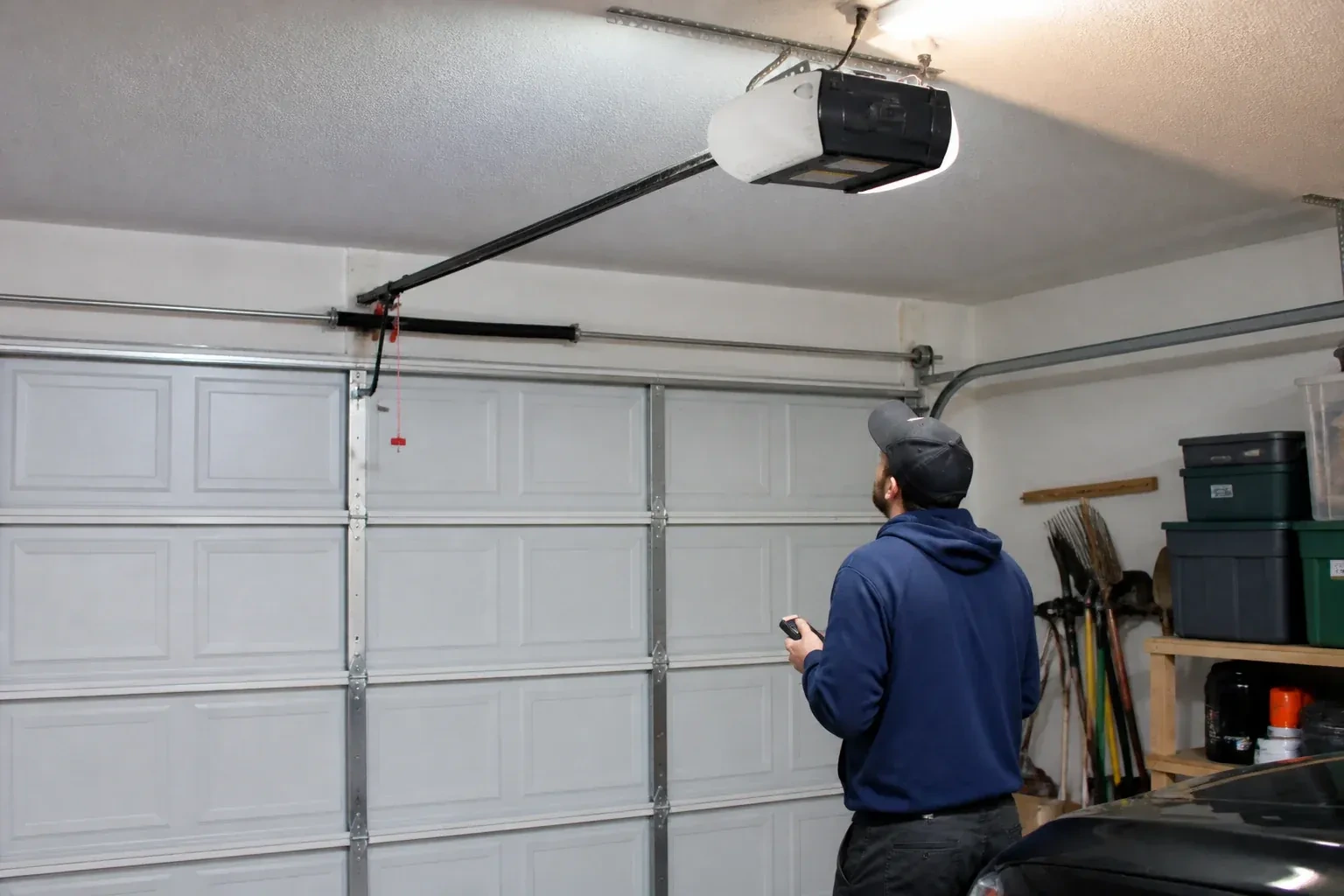
- Press the button and the opener hums for a second, then quits. The trolley is jammed hard against a bolt at the very end of the rail near the motor and will not budge in either direction.
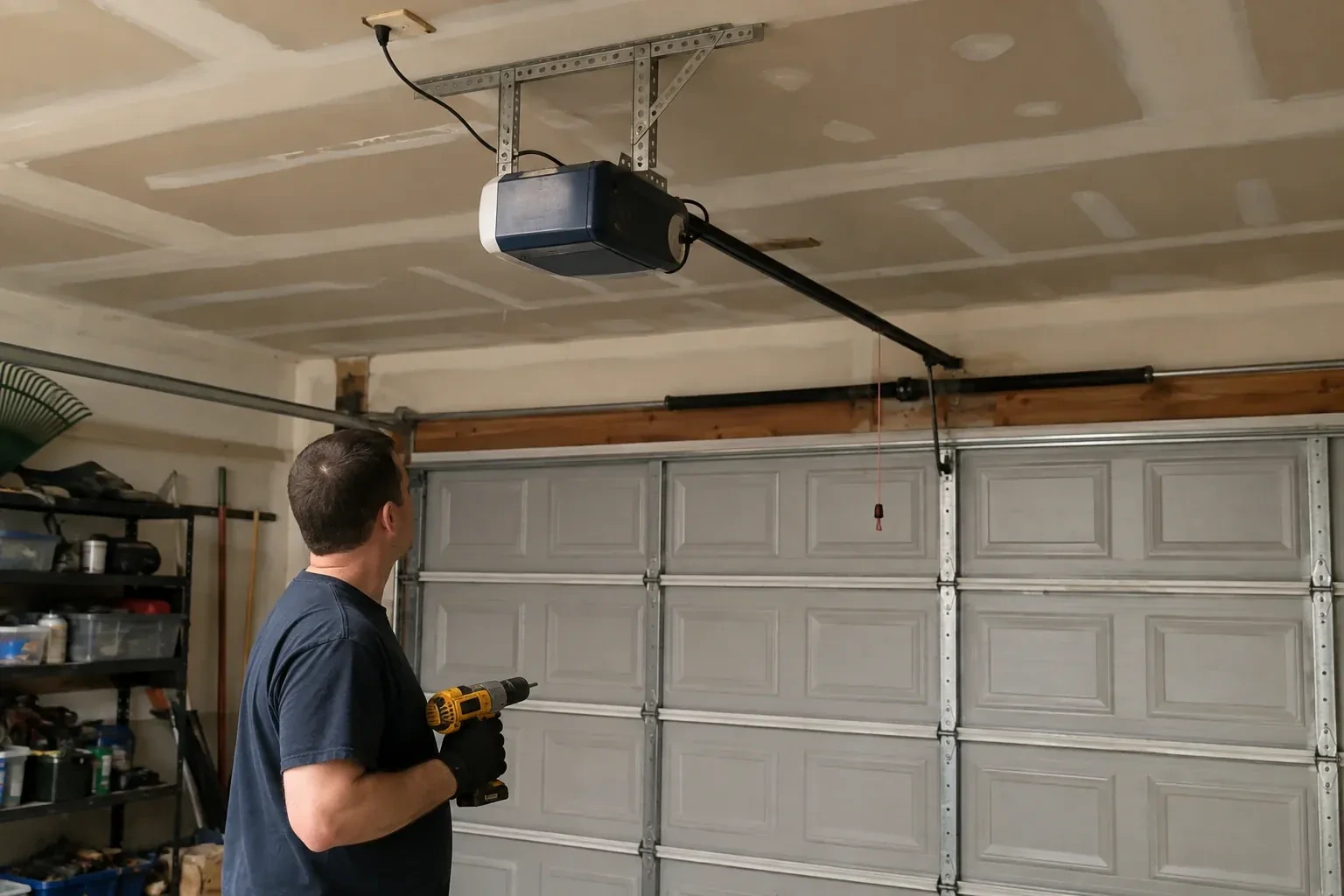
Halfway up, the door lurches. Something in the drive skips a beat, the chain jumps, and the door finishes its travel with a jolt.
Sometimes nothing is broken and the operator has simply forgotten where the door should stop. Travel limits tell it how far to run in each direction; force settings tell it how much effort is normal, so it can notice an obstruction. When limits drift, a door stops short of the floor, reverses at the bottom or opens partway. When force is set low, the door reverses for no reason; set high, it stops protecting anyone beneath it. A chain-drive repair resets both, by screw on older heads or learn buttons on newer ones, then proves the reversal with a block on the floor.
Sound familiar?Downsview
Chain-Drive Opener Repair · Downsview
Scene 1
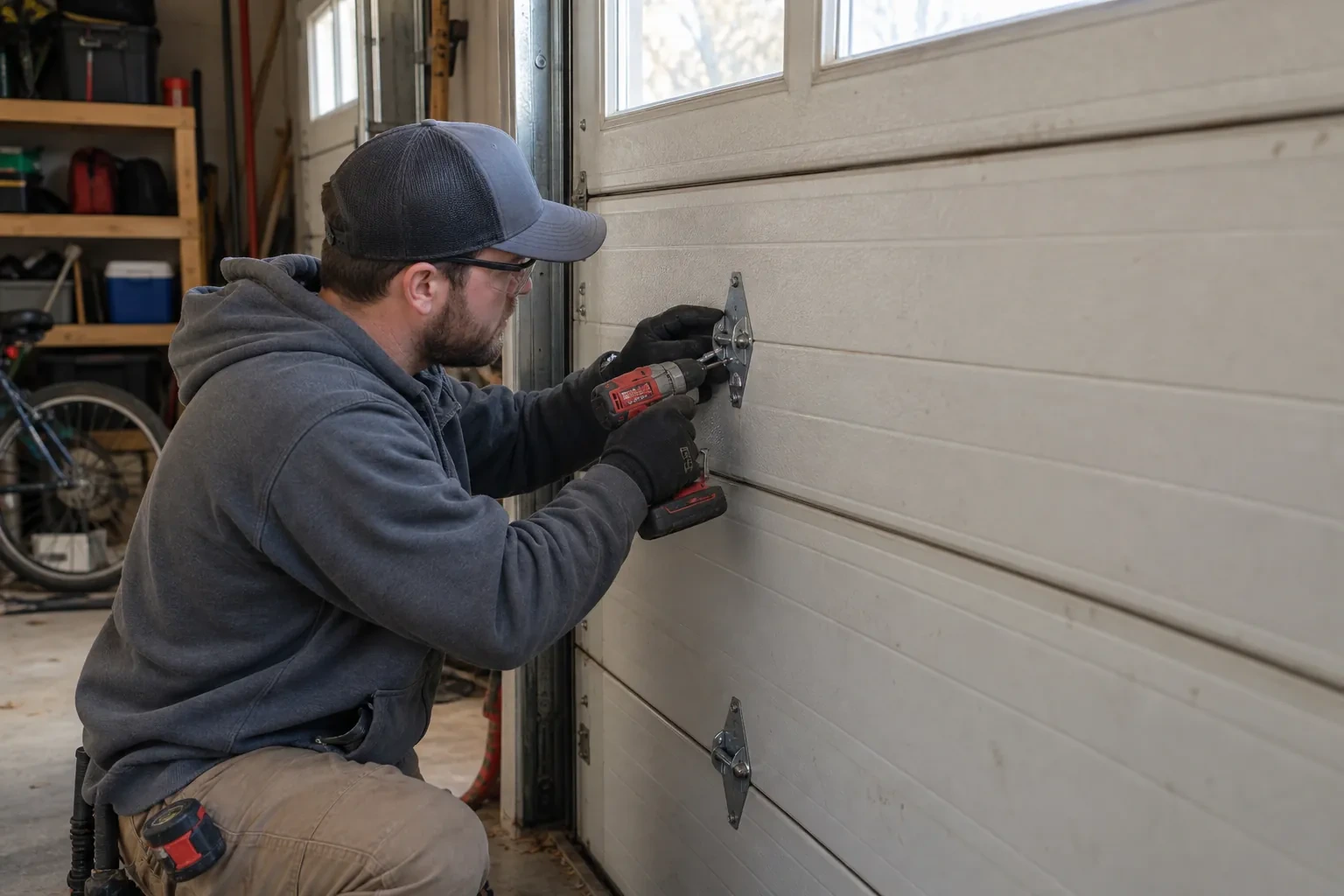
Two settings on the head decide the door's behaviour, and both are checked against what the door is doing. Travel limits set where the door stops in each direction; a door that stops shy of the floor, reverses on touching it or opens partway is out of adjustment. Force sets how much effort the operator treats as normal; too little and the door reverses for no reason, too much and the operator stops noticing an obstruction. The technician notes the current screw positions or the learned values, watches a full cycle and compares what the door does with what the settings say, before deciding whether the fault is in the drive parts or only in the settings.
Scene 2
With the door closed and disconnected, the two nuts on the tensioner shaft at the trolley are used in order. The outer nut, nearest the door, is loosened until the chain droops below the rail, the inner nut is backed off to make room, and then the outer nut is turned to raise the chain until it sits at the height the opener's own manual calls for on that rail shape, measured at the rail's midpoint. The inner nut is tightened against it to lock the setting. Once the door is reconnected and closed some droop appears in the chain; that is normal provided the measurement returns with the door open.
Scene 3
Before leaving, the technician writes down what was found and what was fitted: the operator's model and age, whether the gear kit, sprocket, chain, trolley or rail hardware was replaced, the tension figure set, the limit and force positions, and the results of the reversal tests. The manual is hung near the wall control so the model's own instructions are at hand for the monthly tests. This note makes any future call a short conversation, tells a home inspector what has been done, and gives whoever owns the house next a clear picture of what is hanging over the car.
What shapes the quoteDownsview Door Specialists
FeesSame any hour
Look along the rail from the motor head to the door. A chain drive shows a steel roller chain, like a heavier bicycle chain, running along the top or inside a channel of the rail and over a toothed sprocket on top of the head. A belt drive has a flat rubber belt in the same place, and a screw drive has a threaded steel rod inside the rail with no chain or belt at all.
The sprocket is the toothed wheel on top of the motor head that pulls the chain. Every cycle drags the chain over its teeth, and over years the teeth wear thin and hooked, letting the chain ride up and skip under load, often at the same point on the rail each time. A sprocket that has loosened on its shaft lags behind the motor. Worn sprockets are replaced as part of the gear and sprocket assembly.
The operator believes it has hit something. Either the down travel limit is set a little too far, so the door is pressing into the floor past its stopping point, or the closing force is set too low for the door's current weight, so the last push reads as an obstruction. A seal frozen to the slab causes the same reversal in winter. The technician adjusts the limit or the force, in that order, and re-tests the reversal afterwards.
TorontoOntario
Chain-Drive Opener Repair · Toronto, North Park
Every square is one home in a hundred.
On-site assessment preferred · (289) 236-6217, open 24/7